


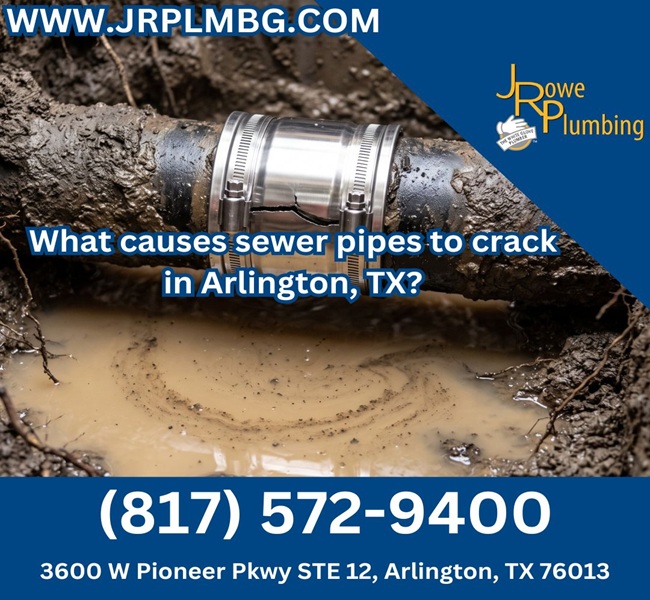
Sewer pipes crack when steady outside pressure, shifting ground, invasive roots, or internal corrosion overwhelm the strength of the pipe wall. In most Arlington homes the damage is not sudden. It builds quietly over years as soil moves, minerals collect, and older materials lose the durability they once had. If you have noticed slow drains, a faint odor in the yard, or gurgling fixtures, your concern is reasonable, and working with an experienced plumber to catch the cause early matters. A cracked sewer line rarely stays a small problem. Left alone, a hairline fracture can widen into a full break that affects your foundation, your landscaping, and your daily comfort. Understanding why these lines fail gives you the knowledge to act before a minor issue turns into a major repair.

Why Sewer Lines Fail Over Time
Every sewer line is engineered to carry waste away reliably for decades, yet no material lasts forever. The line under your yard faces constant stress from the soil pressing against it, the water flowing through it, and the temperature changes moving around it. Failure is usually the result of several forces acting together rather than a single dramatic event.
The Difference Between Cracks, Fractures, and Collapse
Not all pipe damage looks the same. A crack is a thin separation in the pipe wall that may still hold its shape while slowly leaking. A fracture is a more serious break where sections shift out of alignment, allowing soil and roots to enter. A collapse happens when the pipe loses structural integrity entirely and caves inward, blocking flow. These stages often progress in order, which is why timely Sewer Line Repair on a small crack can keep it from becoming a costly emergency. Recognizing the early stage gives you the widest range of repair options.
How Aging Pipe Materials Set the Stage for Damage
The material buried under your property has a direct effect on how it ages. Many Arlington homes were built before 1990, and a large share of those still rely on original piping that was never meant to last a lifetime.
Galvanized Steel and Cast Iron in Older Homes
Galvanized steel and cast iron were standard choices for generations of Texas homebuilders. Both are strong when new, but both corrode from the inside as decades pass. Cast iron develops rough interior scaling that catches debris, while galvanized steel gradually rusts and thins. As the wall weakens, it becomes far more likely to crack under the same soil pressure it once resisted easily. Homeowners in established Arlington neighborhoods are especially likely to have these aging materials still in service.
Soil Movement and Shifting Ground
The ground your pipes rest in is not stable. Across Tarrant County, the soil is constantly expanding and contracting, and buried lines absorb the strain every time it moves.
How Expansive Clay Soil Puts Pressure on Buried Lines
Arlington sits on expansive clay soil, one of the most demanding conditions a sewer line can face. This clay swells dramatically when it absorbs water and shrinks just as much when it dries out. Think of it like a sponge that grows and shrinks with the seasons. Each cycle shifts the soil around your pipe, tugging joints out of alignment and placing uneven pressure on the pipe wall. Over years, that repeated movement is enough to crack even a well installed line. This is one of the most common reasons sewer damage appears in homes across the area.
Seasonal Freeze and Thaw Cycles
North Texas winters bring their own stress through freeze and thaw cycles. When temperatures drop, any moisture in the surrounding soil expands as it freezes, squeezing the pipe. When it warms, the ground settles again. This back and forth loosens joints and works existing weak points wider. While Arlington does not see the harsh winters of colder states, the sudden swings between warm days and freezing nights are often more damaging than a steady cold, because the ground never has time to stabilize.
Tree Root Intrusion
Roots are one of the most persistent threats to any sewer line, and they are relentless in their search for moisture and nutrients.
Why Established Neighborhoods See More Root Damage
Arlington's older neighborhoods are prized for their mature trees, but those same trees send out extensive root systems in search of water. A sewer line carrying warm, nutrient rich water is a natural target. Roots detect even the smallest amount of escaping moisture from a loose joint or a tiny crack, then grow toward it. Once a fine root finds an opening, it pushes inside, thickens over time, and pries the crack wider. What began as a hairline gap can become a full break as the root expands, turning a minor leak into a blockage that often requires professional Drain Cleaning, or into a full collapse.
Corrosion and Mineral Buildup
Damage does not always come from the outside. The water moving through your pipes plays a major role in how quickly they wear.
The Role of Hard Water in Interior Pipe Wear
Arlington is known for hard water, with mineral content commonly ranging from 250 to 350 parts per million. All those dissolved minerals do not simply pass through. They cling to interior pipe walls, building layers of scale that narrow the passage and trap debris. In metal pipes, this buildup speeds corrosion and creates rough surfaces where cracks are more likely to begin. Over time, the combination of scaling and corrosion thins the pipe from within, leaving it far more vulnerable to the outside pressures already at work in the soil.
Warning Signs Your Sewer Line May Be Cracked
A cracked sewer line usually announces itself before it fails completely. Learning to read these signals helps you respond while repairs are still straightforward. The table below outlines common warning signs and what each one often points to.
| Warning Sign | What It Often Points To |
| Multiple slow drains at once | A blockage or crack in the main sewer line rather than one fixture |
| Sewage odor indoors or in the yard | Escaping waste from a break in the buried line |
| Unusually green or soggy patches of lawn | A leaking pipe feeding water and nutrients into the soil |
| Gurgling sounds from toilets or drains | Trapped air from a partial obstruction in the line |
Indoor clues tend to show up first at the lowest fixtures in the home, such as a downstairs toilet or a floor drain. Outdoor clues often appear as sinkholes, foundation movement, or shifting patches of yard above the pipe path, where Slab Leak Detection can pinpoint hidden trouble beneath the foundation. Any one of these deserves a closer look.
What to Do If You Suspect a Cracked Sewer Line
If the signs point to a possible crack, the most valuable step is an accurate diagnosis. Professional Leak Detection, including a camera run through the line, reveals the exact location and severity of the damage without digging blindly. This inspection reveals whether you are dealing with a minor crack, root intrusion, or a section nearing collapse, and it guides the right repair approach.
You can also take steps to protect the line and extend its life. Avoid planting large trees near the sewer path, be mindful of what goes down your drains, and address slow drains promptly instead of ignoring them. In homes with older galvanized or cast iron piping, a professional evaluation can help you plan ahead before a failure forces the decision for you. J. Rowe Plumbing has served Arlington homeowners since 1984 and holds Texas Master Plumber License number 37068, bringing more than thirty years of local experience to these exact conditions.

Protecting Your Home From Sewer Line Damage
Sewer pipes crack for reasons that are especially common across Arlington, from expansive clay soil and freeze and thaw cycles to aggressive tree roots, hard water buildup, and aging pipe materials in homes built before 1990. Each of these forces adds stress, and together they explain why so many local lines eventually fail. The good news is that early awareness gives you real control. By watching for warning signs and acting on them, you can often turn a major repair into a manageable one. If you suspect your sewer line may be cracked, the team at J. Rowe Plumbing can inspect the problem and recommend a clear path forward. Reach out to schedule same day service during business hours, or visit the website to learn more about protecting your home.


