


Sewer Line Repair Arlington: Expert Drain Line Repairs, Sewer Pipe Restoration & Cost-Effective Solutions
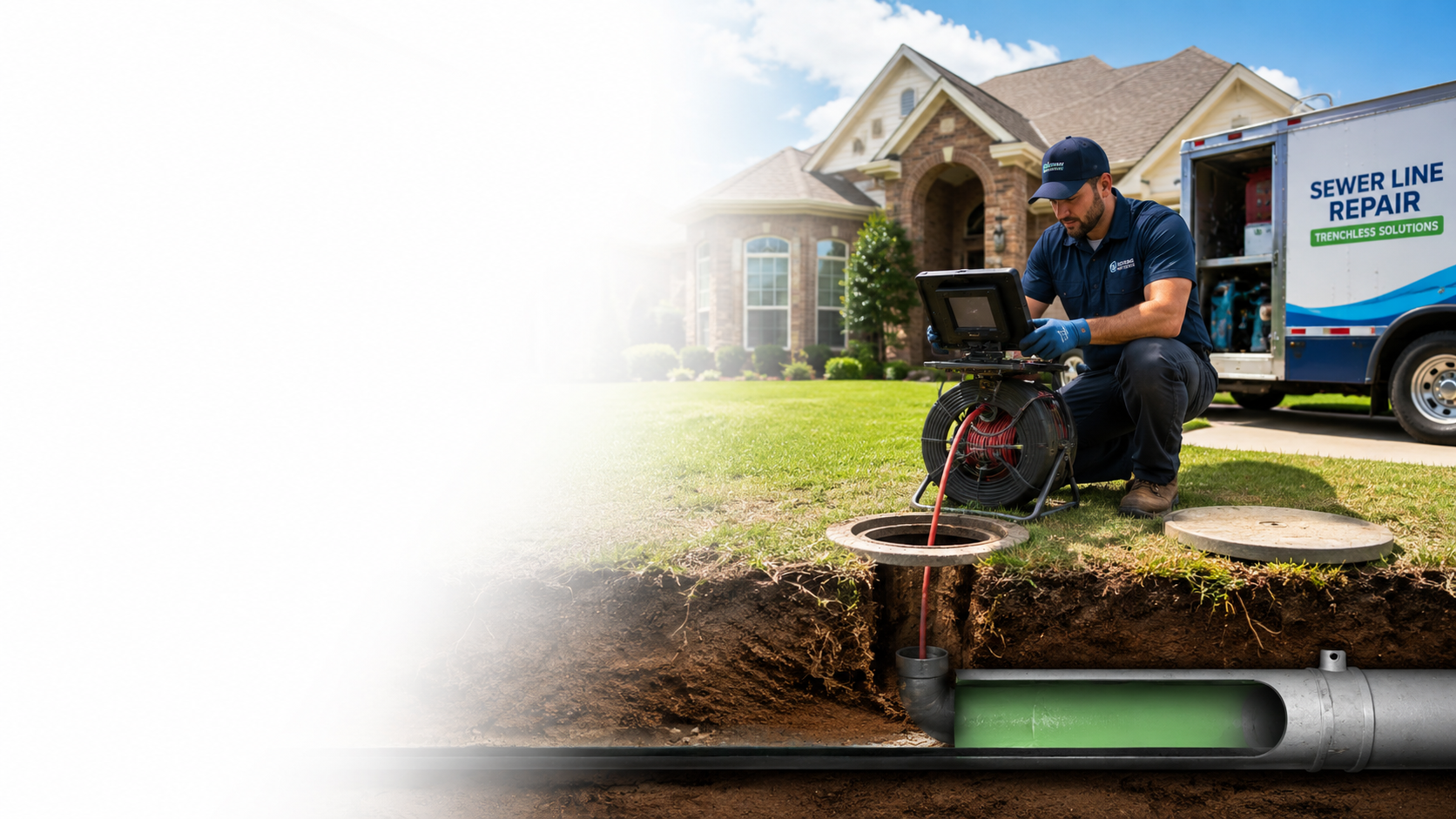
When sewage backs up into your basement or you notice persistent odors near floor drains, you need immediate sewer line repair in Arlington. Whether you're dealing with collapsed cast iron pipe, invasive tree roots, or deteriorating Orangeburg pipe, our team delivers comprehensive diagnosis, trenchless repair options, and full sewer line replacement that protects your property and restores proper drainage.
Sewer Line Repair Services: Trenchless, Pipe Bursting & Excavation Options
Modern sewer line repair services offer multiple approaches depending on the condition of your existing sewer pipe, soil conditions, and the extent of damage. We provide trenchless sewer pipe repair using pipe bursting technology that fractures old cast iron pipe or Orangeburg pipe while simultaneously pulling new high-density polyethylene pipe into place. This method minimizes pavement and floor disruption, preserves landscaping, and reduces sewer line repair costs. Traditional excavation remains necessary when complete access is required for thorough inspection, when environmental factors such as nearby water mains create safety concerns, or when the existing sewer system has collapsed entirely.
Epoxy pipe lining provides an alternative for structurally sound pipes suffering from minor cracks, root intrusion points, or corrosion. Our sewer line repair technician inserts a resin-saturated liner through existing cleanouts, inflates it against the pipe walls, and cures it to form a seamless interior pipe. This trenchless method extends the life of aging sewer lines without full replacement, though it is unsuitable for pipes with significant offset joints, severe collapse, or extensive debris accumulation.
Sewer Line Crack Repair & Leak Detection Using Camera Inspection
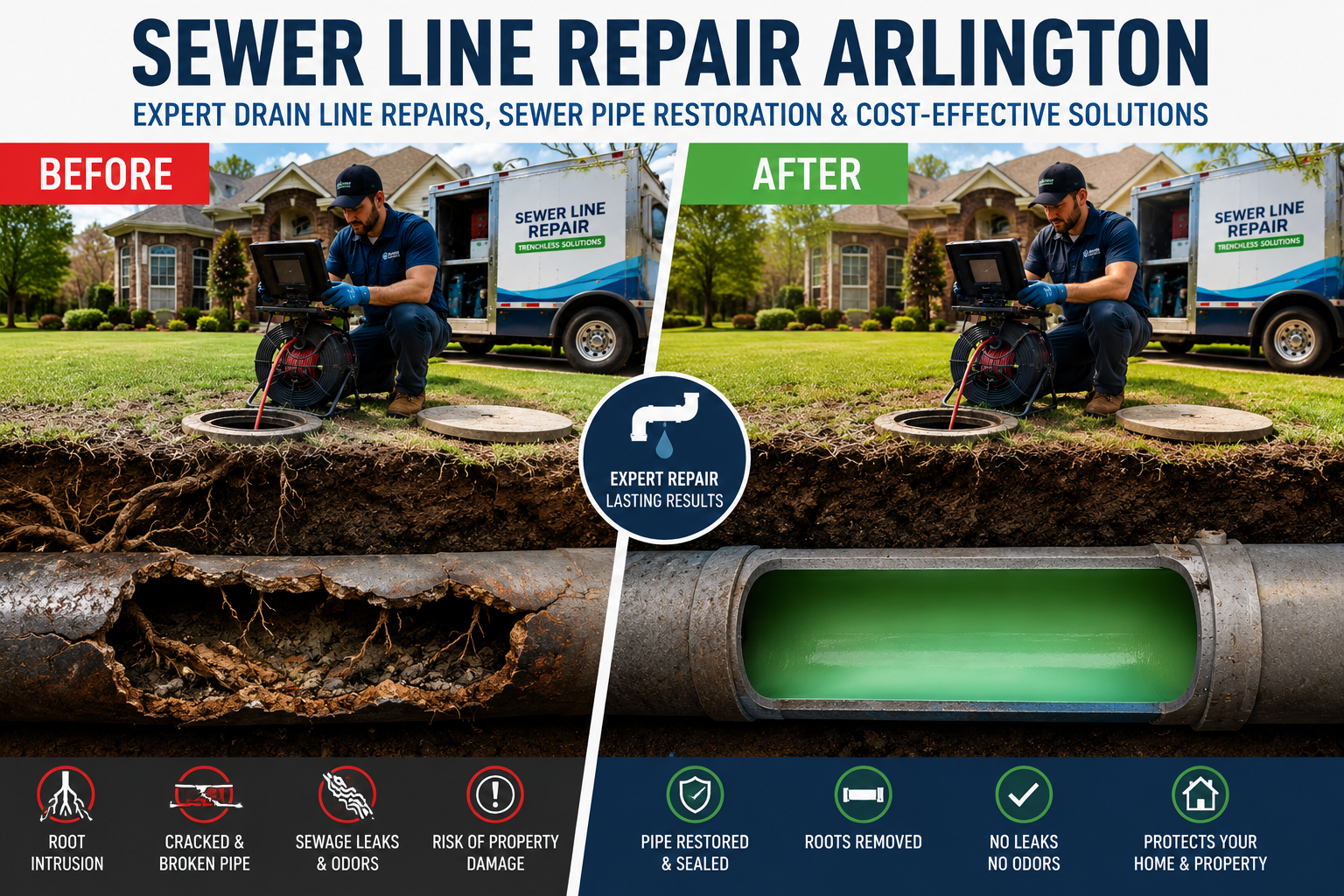
Accurate diagnosis prevents unnecessary excavation and ensures we address the true cause of sewer line failure. Our sewer line repair experts deploy sewer camera inspection technology to identify root intrusion, collapsed sections, grease blockages, and joint separation. The high-definition camera travels the full length of your sewer pipe, recording video that pinpoints the exact location and nature of damage for sewer line leak repair, sewer line crack repair, and drain pipe repair needs.
Tree roots cause the majority of Arlington sewer line damage. Roots enter through hairline cracks in cast iron pipe or terra-cotta joints seeking moisture and nutrients. Once inside, roots expand, fracturing the pipe and trapping debris. Our inspection reveals whether the sewer line clog can be fixed, if sewer line mending is sufficient, or if full sewer line replacement is warranted. Cast iron pipe, common in Arlington homes built before 1975, corrodes from the inside out. Camera inspection shows the remaining wall thickness and whether epoxy lining can rehabilitate the line or the drain line needs fixing through complete replacement.
Warning Signs Requiring Immediate Drain Line Repair
- Multiple drain backups: When toilets, showers, and floor drains back up simultaneously, the main sewer line is obstructed and needs drain line repairs.
- Sewage odors near basement floor drains: Indicates sewer trap failure, vent stack issues, or sewer pipe cracks allowing gas escape.
- Lush patches in the yard: Leaking sewage fertilizes grass above underground pipe damage requiring sewer line leak fixes.
- Foundation cracks or settling: Leaking sewer lines erode soil, causing sinkholes and structural movement.
- Slow drainage throughout the home: Persistent slow drains despite clearing individual fixtures point to main line restriction needing drain pipes repair.
- Gurgling sounds from drains: Air displaced by partial blockages creates characteristic gurgling as water struggles past obstructions.
Sewer Line Maintenance: Preventing Root Intrusion & Extending Pipe Lifespan
Proactive sewer line maintenance reduces emergency sewer line repair costs and extends the functional life of your plumbing system. We recommend annual sewer camera inspection for homes with mature trees, properties over 40 years old, or those with cast iron or Orangeburg pipe. Regular inspection identifies developing issues before they cause sewage backups or require emergency sewer line replacement.
Mechanical root cutting removes invasive roots without damaging pipe walls. Our sewer line repair contractors use specialized cutting heads that grind roots flush with the interior pipe surface, restoring flow capacity. Root cutting should be paired with root-inhibiting treatments that discourage regrowth without harming trees or contaminating groundwater.
Maintenance Schedule by Pipe Material
Sewer Line Repair Cost Factors in Arlington
Sewer line repair costs vary based on pipe length, depth, material selection, repair method, and site-specific challenges. Trenchless methods typically cost more per linear foot than excavation, but they eliminate pavement restoration, landscaping repair, and lengthy labor costs. A typical Arlington sewer line repair job ranges from 40 to 120 linear feet, depending on the house's position relative to the municipal connection.
Depth significantly impacts sewer line repair pricing. Sewer pipes buried six feet deep require more excavation, shoring, and safety measures than shallow lines. Clay soil, common in Arlington, requires different excavation techniques than sandy or rocky substrates. Proximity to other utilities such as water mains, gas lines, and electrical conduits demands careful hand-digging and utility coordination, extending project duration and labor costs.
Variables That Impact Sewer Line Repair Prices
- Pipe material selection: PVC costs less than HDPE; cast iron pipe is premium but rarely used for replacement.
- Permit and inspection fees: Arlington requires plumbing permits for sewer line work; costs vary by project scope.
- Pavement restoration: Concrete driveways cost more to cut and repair than asphalt or gravel surfaces.
- Tree removal or root cutting: Trees growing over the sewer line may require removal or extensive root cutting.
- Cleanout installation: Adding accessible cleanouts during replacement simplifies future maintenance.
- Municipal connection fees: Reconnecting to city sewers may require inspection and approval from Arlington utility authorities.
Our Sewer Line Repairing Process: From Inspection Through Final Testing
Every sewer line repair job begins with comprehensive camera inspection. We insert the sewer camera through an existing cleanout or access the drain line through a floor drain. The camera records the entire sewer run, documenting damage type, location, and severity. We provide you with inspection video and a written report detailing our findings and recommended solutions for sewer line installation repair, drain line fixing, or sewer line restoration.
Once you approve the repair scope, we obtain necessary permits from Arlington building authorities. Trenchless repairs typically require notification, while full replacement requires excavation permits and utility locates. We coordinate with Texas 811 to mark underground utilities before any digging begins, ensuring safe excavation around water, gas, and electrical lines.
Step-by-Step Project Execution
- Site preparation: Mark excavation areas, protect landscaping, and establish equipment access for sewer line repairing
- Excavation or access point creation: Dig entry and exit pits for trenchless work or full trench for traditional drain line repair
- Old pipe removal or bursting: Extract deteriorated pipe sections or fracture them with pipe bursting equipment
- New pipe installation: Pull or lay new PVC or HDPE pipe, ensuring proper slope for drainage and valve connections
- Connection and sealing: Connect to the existing house drain and municipal sewer; seal all joints to prevent future leaks
- Backfill and compaction: Fill excavations in controlled lifts, compacting soil to prevent settling or sinkholes
- Surface restoration: Restore pavement, concrete, or landscaping to match existing conditions
- Final inspection and testing: Camera inspect the repaired sewer line, perform flow testing, and obtain municipal approval
Frequently Asked Questions About Sewer Line Repair Providers
When is maintenance no longer cost effective and drain line replacement needed?
Maintenance and drain cleaning become ineffective when you require professional service more than twice annually for the same issue, when camera inspection reveals more than 40% of the pipe length is damaged, or when cast iron pipe shows advanced interior corrosion. Repeated root cutting in the same location indicates the pipe has separated or the sewer line cracked beyond repair. At that point, the cost of ongoing service exceeds the long-term value of sewer line replacement, which typically lasts 50-100 years.
Is trenchless sewer relining worth the cost?
Trenchless sewer relining using epoxy justifies its cost when the existing pipe structure remains intact but suffers from minor cracks, joint leaks, or light root intrusion. The method eliminates landscape destruction, pavement removal, and lengthy restoration work. However, relining cannot correct pipes with significant belly sections where debris collects, fully collapsed segments, or severely offset joints. If camera inspection shows more than 30% of the pipe requires excavation anyway, full sewer pipe repairs often deliver better long-term value than partial relining.
Will rock salt kill tree roots in a sewer line?
Rock salt can damage and kill roots inside sewer pipes, but it poses significant risks. Salt corrodes cast iron pipe, harms beneficial soil bacteria, and can kill the entire tree if used in sufficient quantity to clear roots. Dead roots still obstruct the line until mechanically removed through sewer line unclogging. Modern root-inhibiting foams provide targeted treatment that discourages root regrowth without pipe corrosion or tree damage. Mechanical root cutting paired with these treatments offers safer, more effective long-term control.
The most common problems are when the pipe is separated, cracked, filled with tree roots?
Yes, pipe separation at joints, longitudinal or circumferential cracks, and tree root intrusion represent the three leading causes of sewer line failure in Arlington requiring sewer line clogs repair and sewer line leaking repair. Cast iron pipe separates when the oakum and lead joints deteriorate after 60-80 years. Terra-cotta sections separate from ground movement or root pressure. Cracks develop from soil settling, temperature stress on rigid pipe materials, or surface loads. Roots exploit any opening, expanding cracks into major fractures that trap debris.
How do I choose between sewer line repair company options in Arlington?
Choose sewer line repair companies based on licensing verification, camera inspection capabilities, transparent pricing, warranty terms, and local references. The best sewer line repair service provider offers detailed written estimates after thorough inspection, explains repair versus replacement options, and provides documentation of previous sewer line repair jobs. Ask about their sewer line repairman qualifications, whether they employ licensed plumbers, and if they handle permits and municipal inspections. Avoid sewer line repair contractors who quote prices without camera inspection or pressure you into immediate decisions.
Clients Reviews
