


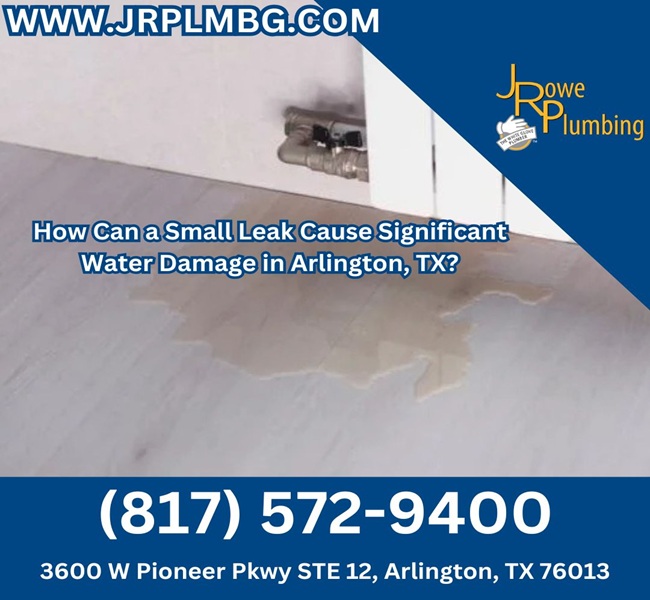
A small leak can cause significant water damage because water travels, hides, and works continuously long before anyone notices a problem or calls a plumber. A slow drip behind a wall or under a slab does not stay small. It saturates building materials, feeds mold, weakens framing, and quietly raises your water usage day after day. For homeowners, landlords, and property managers in Arlington, this matters because so much of the local housing stock was built decades ago, and the materials inside those walls are reaching the end of their service life. Understanding how a minor leak becomes a major repair helps you act early, protect your property, and avoid the kind of damage that spreads far beyond the original drip.
Why a Small Leak Is Rarely a Small Problem
The danger of a small leak is not the volume of water you see. It is the water you never see at all. A faucet drip on the counter is annoying but obvious, the kind of issue a simple Leaky Faucet Repair resolves quickly. A pinhole leak inside a wall cavity is a different threat entirely, because it can run for weeks or months while the only evidence stays sealed behind drywall, tile, or concrete.
The Damage Happens Where You Cannot See It
Water follows the path of least resistance. A leak high in a wall can wick downward and surface several feet away, which makes the source difficult to trace without proper equipment. By the time a stain appears on a ceiling or a baseboard feels soft, the moisture has often already spread through insulation, framing, and subflooring. Concealed leaks are especially common in older Arlington homes where galvanized supply lines and cast iron drains have been corroding from the inside for years. The pipe may look intact from the outside while its interior walls are thinning steadily.
Local Conditions That Accelerate the Risk
Arlington presents a specific set of conditions that turn ordinary plumbing wear into accelerated failure. These factors rarely act alone. They stack on top of each other and shorten the life of the pipes running through your property.
Hard Water and Corroding Galvanized Pipe
Local water carries a high mineral load, often in the range of 250 to 350 parts per million. That hardness leaves scale inside supply lines and gradually eats away at galvanized steel piping common in homes built before 1990. As the interior corrodes, the walls weaken and pinhole leaks form. Mineral buildup also restricts flow, raises pressure in narrowed sections, and stresses joints that were never designed to handle that strain.
Expansive Clay Soil and Foundation Stress
Tarrant County sits on expansive clay soil that swells when wet and shrinks when dry. This constant movement shifts foundations and the plumbing buried beneath them. Supply and drain lines under a slab can be pulled, bent, or cracked as the ground moves through wet and dry seasons. Accurate Slab Leak Detection becomes essential here, because a leak under the slab then feeds more moisture into the soil, which only intensifies the cycle of movement and damage.
Freeze and Thaw Temperature Swings
North Texas weather can swing from mild to freezing in a single day. When water inside a pipe freezes, it expands and places pressure on the pipe wall. Even if the pipe does not burst outright, repeated freezing and thawing weakens joints and creates hairline cracks. Those small fractures often begin leaking slowly once temperatures rise, and the seep can continue unnoticed long after the cold snap has passed.
How a Minor Leak Escalates Over Time
A leak does not jump from harmless to catastrophic. It moves through predictable stages, and each stage you ignore raises the cost and complexity of the eventual repair. Recognizing where a leak sits on that timeline is the key to stopping it before it reaches the expensive end.
The Early Cosmetic Stage Most People Overlook
In the earliest phase, the signs are easy to dismiss. You might notice a faint musty smell, a slightly higher water bill, or a small discoloration on a wall. Many people assume these are minor or unrelated. This stage is the most forgiving and the least costly to address, yet it is also the one most often ignored because the property still looks and feels fine.
When Structural Decay and Mold Set In
Left alone, persistent moisture moves into the materials that hold your home together. Wood framing absorbs water, swells, and begins to rot. Drywall softens and crumbles. Within roughly one to two days of sustained dampness, mold can begin to grow, and once it takes hold it spreads through porous surfaces and into the air. At this point the problem is no longer just plumbing. It becomes a structural and indoor air quality concern that requires far more than a simple pipe repair.
What Waiting Costs Homeowners, Landlords, and Property Managers
The consequences of delay look different depending on who owns the risk. A homeowner faces damage to the place they live, along with disruption and the stress of major repairs. A landlord faces tenant complaints, potential habitability issues, and the loss of rental income while a unit is repaired. A property manager faces all of the above across multiple units, plus the responsibility of documenting and resolving the problem quickly. In every case, what could have been a straightforward Water Leak Repair in one visit becomes a project involving remediation, reconstruction, and lost time.
Leak Stage vs. Resulting Damage
| Leak Stage | Resulting Damage |
| Slow seep behind wall or under slab | Rising water usage with no visible cause and a faint musty odor |
| Surface staining and dampness | Discolored walls or ceilings, soft baseboards, and peeling paint |
| Saturated building materials | Swollen framing, crumbling drywall, and early mold growth |
| Structural and air quality decline | Wood rot, widespread mold, and compromised foundation support |
How to Detect and Stop a Leak Before It Spreads
The good news is that most leaks announce themselves if you know what to watch for. Catching the signs early and pairing your own awareness with professional diagnosis is the most reliable way to keep a small leak small.
Warning Signs You Can Spot Yourself
You do not need special tools to notice the early indicators of a hidden leak. Stay alert for the following:
- A water bill that climbs without any change in household usage
- A musty or earthy smell that lingers in a room or closet
- Stains, bubbling, or discoloration on walls, ceilings, or floors
- The faint sound of running water when every fixture is turned off
- Warm or damp spots on a floor that may signal a leak in a hot water line under the slab
Professional Leak Detection and Repair
When the signs point to a hidden leak, professional Leak Detection is what separates a targeted repair from unnecessary demolition. A trained plumber uses specialized equipment to pinpoint moisture behind walls and beneath slabs without tearing open the structure to search. As a family owned company serving Arlington since 1984 and holding Master Plumber License number 37068, JRowe Plumbing brings the field experience to read these conditions correctly and recommend the right fix the first time. That precision protects your property and your budget by keeping repairs focused on the actual problem.
Preventing the Next Leak in Older Arlington Homes
Detection solves the leak in front of you. Prevention reduces the odds of the next one. In older local homes, this often means replacing aging galvanized supply lines and worn fixtures before they fail, rather than waiting for the next pinhole to open. Routine inspection of exposed pipes, monitoring water pressure, and addressing minor drips promptly all extend the life of your plumbing system. Given the hard water, shifting clay soil, and seasonal temperature swings unique to this area, proactive maintenance is one of the most practical investments a property owner can make.
Schedule Same Day Leak Service in Arlington
A small leak earns its reputation as a major threat by working quietly and continuously where you cannot see it. Whether the cause is corroding galvanized pipe, soil movement under the slab, or stress from freezing and thawing, the pattern is the same. Early action keeps the problem manageable, while delay invites structural damage and mold. So when you ask how a small leak can cause such significant water damage in Arlington, the answer comes down to time, hidden moisture, and the demanding local conditions that speed everything along. If you suspect a leak in your home or rental property, JRowe Plumbing offers same day response during business hours to find the source and stop the damage before it spreads. Reach out or visit jrplmbg.com to schedule your service.


