


Your water heater is not producing hot water most likely because of sediment buildup, a failed heating element or thermostat, a pilot light issue, or a unit that has simply reached the end of its service life. For Arlington homeowners, hard water with mineral concentrations between 250 and 350 PPM adds an extra layer of risk that accelerates nearly every one of these failure points faster than in other parts of the country. If you turned on the tap this morning and got nothing but cold water, understanding exactly what went wrong is the first step toward getting it fixed quickly and correctly. Speaking with a trusted plumber in Arlington can help you identify the root cause fast and avoid guesswork that leads to repeated repairs.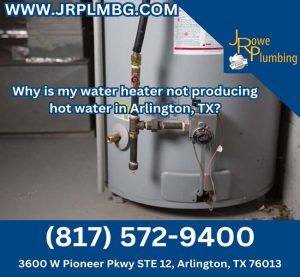
What Arlington Homeowners Need to Know First
Not every loss of hot water means your water heater needs to be replaced. In many cases, the problem is a specific component that has worn out, a maintenance step that was missed, or an environmental factor that is unique to North Texas. Before assuming the worst, it helps to understand what your unit is up against every single day it operates in this region.
Why Arlington's Hard Water Accelerates Water Heater Problems
Arlington sits in one of the harder water zones in Texas. The municipal water supply consistently carries dissolved calcium and magnesium at levels that fall between 250 and 350 parts per million. That mineral load does not simply pass through your water heater harmlessly. Over time, it settles at the bottom of the tank or coats the internal components of a tankless unit, creating a layer of insulation between your heating element and the water it is supposed to heat. The longer this is ignored, the harder your unit has to work, and the shorter its functional lifespan becomes. This is not a generic warning. It is one of the leading reasons Arlington homeowners replace water heaters years earlier than the national average suggests they should.
Common Reasons Your Water Heater Is Not Producing Hot Water
There are several distinct failure points that can cut off your hot water supply. Some are quick fixes a homeowner can handle safely. Others require a licensed plumber to diagnose and repair correctly. Here is a breakdown of the most common culprits.
Sediment Buildup from Arlington's High Mineral Content
This is the most frequently overlooked cause of reduced or lost hot water in Arlington homes. Calcium and magnesium settle at the bottom of the tank over time, forming a hard, rocky layer that sits between the burner and the water. The unit keeps running, but it cannot transfer heat efficiently through that barrier. You may notice the water takes much longer to get warm, or you get a shorter burst of hot water before it turns lukewarm.
How 250 to 350 PPM Mineral Levels Destroy Heating Efficiency
At these concentration levels, sediment accumulation can become significant in as little as 12 to 18 months without regular flushing. Once that layer builds past a certain thickness, the burner or heating element is essentially working overtime to heat through stone rather than water. Energy bills go up, recovery times slow down, and the unit eventually fails well ahead of schedule. Annual flushing is not optional in Arlington. It is the single most important maintenance task you can perform to protect your investment.
Pilot Light or Ignition Failure (Gas Units)
On gas powered tank water heaters, a pilot light that has gone out is one of the most common and straightforward explanations for a sudden loss of hot water. Modern units use electronic ignition rather than a standing pilot, which means the failure mode shifts to the igniter itself or the control board. Either way, if no flame is present, no heat is produced.
When a Simple Relight Is Enough vs. When It Is Not
If your pilot light went out due to a brief draft or a temporary interruption in gas flow, relighting it following the manufacturer's instructions on the access panel is usually all that is needed. However, if the pilot will not stay lit after repeated attempts, the thermocouple is likely the issue. That small sensor is what tells the gas valve the pilot is burning safely. When it wears out, it shuts off gas flow as a precaution. Replacing a thermocouple is a low cost repair, but it does require working with gas components and is best handled by a professional.
Faulty Heating Element (Electric Units)
Electric water heaters rely on one or two resistive heating elements submerged inside the tank. When one element fails, you typically get some hot water but not enough to meet household demand. When both fail, you get no hot water at all. Element failure is common in areas with hard water because mineral deposits cling to the element surface and cause it to overheat and burn out prematurely. In many cases, Water Heater Repair is the appropriate fix rather than a full replacement, and a licensed plumber can determine that during a single diagnostic visit.
Signs Both Elements Have Failed at Once
If your electric water heater is producing absolutely no hot water and the unit is receiving power, there is a strong chance both elements have failed. This is more likely to happen in older units that have never been flushed, or in households where water demand regularly exceeds the tank's recovery capacity. A plumber can test each element with a multimeter and replace only what is necessary rather than the entire unit, provided the tank itself is still in good condition.
Thermostat Set Too Low or Has Failed
Every water heater has at least one thermostat that tells the heating element or burner when to activate. If the thermostat is set too low, the water will be warm but not truly hot. If the thermostat has failed entirely, the unit may not heat at all, or it may cycle on and off erratically. The recommended setting for most residential units is 120 degrees Fahrenheit, which balances performance with safety.
The Difference Between Adjustment and Replacement
On tank water heaters, the thermostat is typically accessible behind a small panel on the side of the unit. Adjusting the setting is straightforward. If adjusting it has no effect, or if you notice the water temperature fluctuating unpredictably, the thermostat itself has likely failed and needs to be replaced. This is a component repair that is well within the scope of a service call rather than a full unit replacement.
Tripped Breaker or Gas Supply Interruption
Before assuming a mechanical failure, it is worth checking the basics. Electric water heaters draw significant amperage, and it is not unusual for the dedicated circuit breaker to trip, especially in older homes with aging electrical panels. For gas units, a temporary interruption in supply to the neighborhood or a shutoff valve that was accidentally closed can explain a sudden loss of hot water with no other symptoms.
Quick Checks Before You Call a Plumber
For electric units, locate your breaker panel and look for the water heater circuit. If the breaker is in the tripped position, reset it and wait 30 to 45 minutes to see if hot water returns. For gas units, check that the shutoff valve near the unit is fully open and confirm that other gas appliances in the home are operating normally. If the breaker keeps tripping after a reset, stop resetting it. A repeatedly tripping breaker is a sign of an electrical fault that requires professional diagnosis.
A Water Heater That Has Exceeded Its Service Life
Sometimes the honest answer is that the unit has simply run its course. Water heaters are not designed to last forever, and in Arlington's hard water environment, they often underperform relative to their rated lifespan if they have not been maintained.
Average Lifespan of Tank vs. Tankless Units in Arlington
A conventional tank water heater in a well maintained home typically lasts between 8 and 12 years. In Arlington, without annual flushing, that range can shrink considerably. Tankless water heaters are built to last significantly longer, with quality units often performing well for 15 to 20 years, but they are not immune to scale buildup and require their own annual descaling service to reach that potential. If your unit is approaching or past these ranges and is showing signs of failure, repair costs can quickly outpace the value of keeping the existing unit running.
Tankless Water Heaters and the No Hot Water Problem
Tankless water heaters operate on a fundamentally different principle than traditional tank units. Rather than storing and reheating a reservoir of water, they heat water on demand as it flows through the unit. This makes them highly efficient under normal conditions, but it also means they have their own distinct failure patterns when something goes wrong.
Why Tankless Units Behave Differently When They Fail
A tankless unit that suddenly stops producing hot water will often display an error code on its digital panel. Common causes include a flow sensor that has stopped detecting water movement, a blocked exhaust vent, a failed igniter, or a water flow rate that is too low to trigger the heating sequence. Unlike a tank unit where failure tends to be gradual, tankless units can stop working abruptly due to a protective shutdown triggered by one of these conditions. Scheduling Tankless Water Heater Repair promptly prevents a short term fault from turning into a full system failure.
Mineral Scale Inside a Tankless Unit and Why Annual Flushing Matters
In Arlington, mineral scale buildup inside the heat exchanger of a tankless unit is one of the primary reasons these otherwise long lasting systems fail early or underperform. The tight passages inside the heat exchanger are vulnerable to calcification, and once restricted, water flow drops below the threshold needed to trigger the burner. Annual descaling using a vinegar flush or manufacturer approved descaling solution is not simply a recommendation. In this water environment, it is the maintenance task that determines whether your tankless unit reaches its full service life or needs to be replaced years ahead of schedule.
A Quick Diagnostic Guide for Arlington Homeowners
Use the table below to match your symptoms with the most likely cause and the appropriate next step.
| Symptom You Are Experiencing | Most Likely Cause and Recommended Action |
|---|---|
| No hot water at all, electric unit | Check the breaker first. If reset does not resolve it, both heating elements or the thermostat may have failed. Schedule a service call. |
| No hot water at all, gas unit | Check pilot light or igniter status. Verify gas supply is active. If pilot will not stay lit, the thermocouple likely needs replacement. |
| Water is warm but never truly hot | Sediment buildup or a thermostat set too low are the primary suspects. Check thermostat setting and schedule a flush if the unit has not been serviced in over a year. |
| Hot water runs out much faster than it used to | Heavy sediment has reduced the effective capacity of the tank. Annual flushing could restore performance. If the unit is over 10 years old, replacement may be more cost effective. |
| Tankless unit stopped working and shows an error code | Do not reset repeatedly without identifying the code. Scale buildup, a blocked vent, or a failed sensor are common causes. A licensed plumber should diagnose the specific fault code. |
When DIY Checks Are Not Enough
There is a meaningful difference between checking a breaker and working on a gas line. Knowing where that line falls is important both for your safety and for the longevity of your water heater.
Warning Signs That Require a Licensed Plumber
Certain symptoms should prompt you to stop troubleshooting on your own and call a professional immediately. These include any smell of gas near the unit, discolored or rusty water coming from hot taps, water pooling around the base of the tank, a popping or rumbling noise coming from inside the tank during heating cycles, or a pilot light that repeatedly goes out. Each of these points to a condition that goes beyond a simple adjustment and carries real risk if left unaddressed or handled incorrectly.
Repair vs. Replacement: How to Know Which One You Need
A good rule of thumb in the plumbing industry is to compare the cost of the repair to the remaining useful life of the unit. If a repair would cost more than half the price of a new water heater and the unit is already in the second half of its expected lifespan, Water Heater Replacement is usually the smarter investment. A licensed plumber can help you make that assessment honestly, factoring in the condition of the tank, the age of the unit, and whether the existing fuel type still makes sense for your household.
Gas tankless water heaters, for example, are a compelling upgrade option for many Arlington homeowners who are replacing aging tank units. They eliminate standby heat loss, produce hot water on demand, and last significantly longer when maintained properly. Many homeowners are simply not aware they are an option until a plumber walks them through the comparison during a service visit.
Why Arlington Residents Trust J. Rowe Plumbing for Water Heater Service
J. Rowe Plumbing has been serving Arlington and the surrounding communities since 1984. That is four decades of experience with the specific plumbing challenges that come with North Texas hard water, clay soil, and the seasonal demand spikes that hit every winter during freeze events. The team installs Rheem tank water heaters and Rinnai and Navien tankless units, and provides a full range of Plumbing Services including repair, flush, and maintenance for both gas and electric systems.
With an A+ rating from the Better Business Bureau maintained for over 30 years, J. Rowe Plumbing brings a level of accountability and consistency that homeowners rely on when the stakes are high. Whether you need a same day diagnosis or a full water heater replacement, the team responds quickly, explains your options clearly, and does the work right the first time.
If your water heater is not producing hot water and you are ready to get it resolved, visit jrplmbg.com to learn more about J. Rowe Plumbing's water heater services or to request a service appointment. The sooner the issue is diagnosed, the better the outcome for your home and your budget.

Conclusion
A water heater that is not producing hot water in Arlington, TX is rarely a mystery when you understand the local environment. Hard water sediment, aging components, pilot or ignition issues, and units past their service life account for the overwhelming majority of cases. The good news is that most of these problems have solutions, and the right plumber can tell you quickly whether you need a repair or a replacement.
Arlington's mineral rich water supply demands more from your water heater than most homeowners realize. Annual flushing, regular thermostat checks, and prompt attention to warning signs are what separate a unit that lasts a decade from one that fails at year six. When the problem is beyond basic troubleshooting, J. Rowe Plumbing is the team that Arlington homeowners have trusted for over 40 years to get it handled with honesty, skill, and care. Reach out at jrplmbg.com and get your hot water back where it belongs.


