


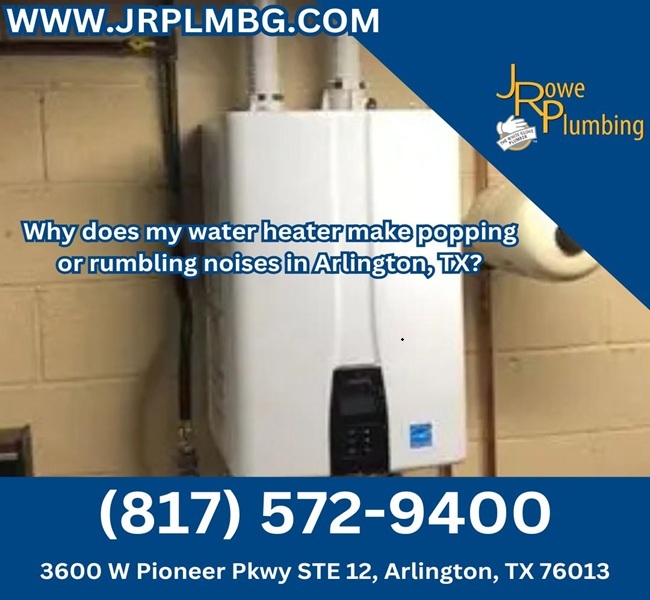
If your water heater is making popping or rumbling noises in Arlington, TX, the most common reason is a layer of hardened mineral sediment sitting at the bottom of the tank. Water trapped beneath that layer overheats and forces its way up as bubbles, which creates the popping, rumbling, or knocking sound you hear. You are not imagining it, and you are not alone. Many local homeowners notice it most often during heavy morning use. The reason this matters is simple. Those sounds are an early warning that your heater is working harder than it should, losing efficiency, and possibly heading toward a shorter lifespan. Understanding what each noise means helps you act before a small annoyance turns into a full replacement. A trusted local plumber can confirm the cause, but learning the signs first puts you in control.
Why Does My Water Heater Make Popping or Rumbling Noises?
The short answer is sediment. Arlington sits in an area with notably hard water, often measuring between 250 and 350 parts per million in mineral content. Every time your heater warms a fresh tank of that water, tiny amounts of calcium and magnesium settle out and sink to the bottom. Over months and years, those minerals harden into a crusty layer. That layer is the source of nearly every popping and rumbling complaint we hear from local homes.
How Mineral Sediment Forms at the Bottom of the Tank
Think of it like the scale that builds up inside a kettle. Hard water carries dissolved minerals, and heat causes those minerals to drop out of the water and collect at the lowest point in the tank. In Arlington, where mineral content runs high, this happens faster than it would in regions with soft water. Homes that have gone several years without a flush tend to carry the heaviest buildup, and that is when the noise becomes most noticeable.
What the Popping Sound Actually Is
Once a thick layer of sediment covers the bottom of the tank, water gets trapped underneath it. The burner or heating element keeps applying heat, so that trapped water boils and turns to steam. The steam pushes up through the sediment in bursts, and each burst makes a popping or rumbling sound. In other words, you are hearing tiny pockets of superheated water fighting their way to the surface. The louder and more frequent the popping, the more sediment has likely accumulated, and at that stage professional Water Heater Repair is often the most reliable fix.
Other Water Heater Sounds and What They Mean
Popping and rumbling get the most attention, but a water heater can produce several other sounds. Each one points to a different issue, and learning to tell them apart helps you describe the problem accurately when you call for service.
Crackling or Ticking
A light crackling often comes from condensation dripping onto the burner in a gas unit, while ticking usually traces back to normal expansion and contraction of pipes and fittings as the temperature changes. These sounds are frequently harmless, though persistent crackling can still signal minor sediment forming.
Screeching or Whistling
A sharp screech or whistle generally means water is being forced through a narrow opening. A valve that is only partly open, or a restricted inlet, can create this high tension sound. It is worth checking that all supply valves are fully open before assuming a deeper problem.
Humming or Vibrating
In electric models, a steady hum can come from a heating element vibrating as water flows around it. The element may simply need tightening. While a hum is rarely an emergency, it should not be ignored if it grows louder over time.
Hissing or Sizzling
Hissing or sizzling can indicate sediment on the element in an electric unit, or moisture reaching a hot surface. In some cases it points to a small leak landing on a warm component. Because hissing can mask a developing leak, it deserves a closer look.
Knocking or Hammering in the Pipes
A loud knock or bang when a faucet shuts off is usually water hammer rather than a heater fault. In older Arlington homes built before 1990, aging galvanized and cast iron pipe can rattle against framing as pressure shifts. Expansive clay soil under the foundation can also move pipes slightly over time, adding to the noise.
Do Tankless Water Heaters Make Noises Too?
Yes, tankless units make sounds as well, though the causes differ. Because a tankless heater has no storage tank, it does not produce the classic sediment driven rumble in the same way. Instead, you may hear sounds tied to the fan, the burner igniting, or water moving through the heat exchanger. The key is knowing which sounds are routine and which are not.
Normal Operating Sounds vs. Warning Sounds
A soft fan whir, a brief clicking at startup, or a gentle flow noise are all normal parts of how a tankless unit runs. Warning sounds are different. A persistent buzzing, grinding, or a loud rattling can signal scale building inside the heat exchanger, since hard water affects tankless models too. When mineral scale collects in those narrow channels, the unit loses efficiency and can overheat. A periodic descaling service helps keep these systems quiet and reliable in our area, and timely Tankless Water Heater Repair can address scale before it shortens the unit's life.
Water Heater Noise Diagnostic Guide
Use the guide below as a quick reference to match the sound you hear with its most likely cause. It is a starting point for conversation, not a substitute for an on site inspection.
| Sound You Hear | Likely Cause |
|---|---|
| Popping or rumbling | Hardened mineral sediment at the bottom of the tank |
| Crackling or ticking | Condensation on the burner or normal pipe expansion |
| Screeching or whistling | Restricted flow through a partly closed valve or inlet |
| Humming or vibrating | A loose heating element vibrating against the water |
| Knocking or hammering | Water hammer or pipes shifting against framing |
What Happens If You Keep Ignoring the Noise?
A noisy water heater rarely fixes itself, and the sound is usually the symptom rather than the problem. When sediment keeps building and you put off addressing it, the consequences add up quietly until something fails. Here is what tends to happen over time:
- Lost efficiency, because the burner has to heat through a layer of sediment before it ever warms the water, which raises energy use.
- Overheating at the base of the tank, since trapped water and concentrated heat create hot spots the system was not designed to handle.
- Added stress on the temperature and pressure relief valve, the safety component that protects against dangerous pressure buildup.
- Cracking or weakening of the tank lining, which can lead to leaks that damage flooring and surrounding walls.
- Premature failure, where a heater that should last many years gives out early and needs full replacement sooner than expected.
In a climate like ours, where winter freeze and thaw cycles already place extra strain on plumbing, an overworked heater is one more weak point you do not want. Prompt Leak Detection can catch moisture around the tank before it spreads to flooring and walls.
When to Call a Professional Plumber
If the popping grows louder, the noise is paired with reduced hot water, or you notice any moisture near the base of the unit, it is time for a professional assessment. A licensed plumber can confirm whether the cause is sediment, a failing component, or something tied to your home's older pipe materials, then recommend the right path forward. Guessing at the fix often makes things worse, especially with gas connections and pressure relief components involved. In cases where the tank has already failed, timely Water Heater Replacement prevents water damage and restores dependable hot water.
J. Rowe Plumbing has served Arlington and the wider Tarrant County area as a family owned company since 1984. Our work is backed by Master Plumber License number 37068, an A plus rating with the Better Business Bureau earned over more than three decades, and Viega ProPress certification for clean and durable connections. We offer same day response during business hours, so you are not left waiting while the problem grows. Whether you prefer to call us directly or send a message through our contact form, you will reach a team that knows local water conditions firsthand.
Conclusion
When your water heater makes popping or rumbling noises in Arlington, the cause is almost always sediment created by our hard local water, though screeching, humming, hissing, and knocking each tell their own story. Tankless units have their own set of sounds, and learning the difference between routine operation and a warning sign protects both your comfort and your budget. The earlier you respond, the more options you have and the longer your system is likely to last. If the noise has you concerned, the team at J. Rowe Plumbing is ready to help you diagnose it and decide on the best next step. Reach out by phone or through the contact form, or explore more helpful guidance on our website at jrplmbg.com.


