


```
If your drain keeps clogging after you have already cleared it, the most likely reason is that the original blockage was never fully removed, only punched through. Clearing a drain and actually fixing the cause of a clog are two different things, and the gap between them is where recurring backups live. For homeowners, landlords, and property managers across Arlington, this matters because the local conditions here, from hard water to aging pipes, quietly set the stage for the same drain to clog again and again. Understanding what a plumber looks for inside the line is the first step toward stopping the cycle instead of repeating it. Below, we walk through what clearing really accomplishes, the real reasons a clog returns, and how a proper diagnosis breaks the pattern for good.
You Cleared the Drain, So Why Is It Backing Up Again?
Few plumbing problems are as frustrating as one that you thought you already solved. The water drained, the gurgling stopped, and then days or weeks later the same sink, tub, or floor drain slows down all over again. The issue is rarely bad luck. It is usually a sign that the work you did treated the symptom rather than the source.
What "Cleared" Really Means When You Snake or Pour Chemicals
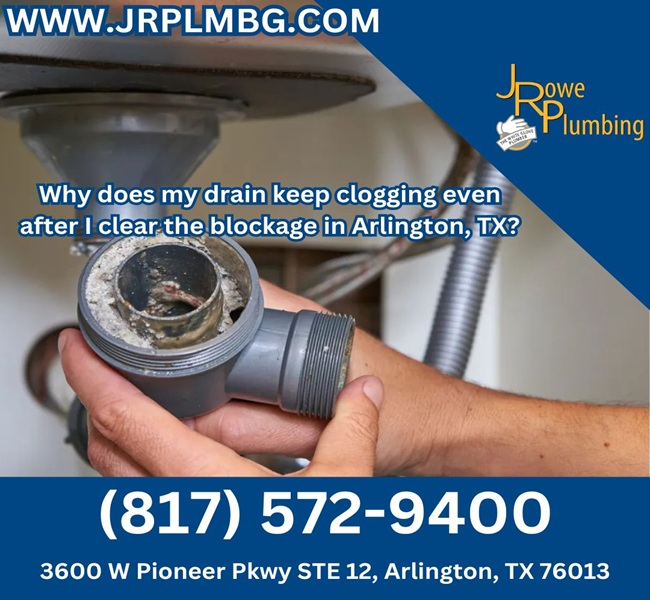
When you run a hand snake or pour a chemical product down a drain, you are typically opening a channel through the blockage rather than removing all of it. The water finds its path again and flows, which feels like success. In reality, a layer of grease, soap scum, hair, or mineral buildup often remains clinging to the pipe walls. That residual material becomes the foundation for the next clog, catching debris and rebuilding the obstruction in the same spot. Thorough Drain Cleaning is designed to remove that residual layer rather than simply open a path through it. Chemical cleaners can also leave the inside of older pipes rough or pitted, which gives future buildup something to grab onto.
The Difference Between a One-Time Clog and a Recurring One
A one-time clog usually has a clear, isolated cause, such as a child dropping an object down a toilet or a single grease pour that hardened. A recurring clog behaves differently. It returns on a schedule, affects the same fixture, or migrates between fixtures that share a line. When a clog keeps coming back, it is telling you that something structural or chronic is at work inside the pipe, not that you simply need to clear it harder the next time.
The Real Reasons the Same Drain Keeps Clogging
Recurring clogs in Arlington homes usually trace back to a blend of causes rather than a single villain. The factors below often overlap, and an older home may be dealing with several at once.
The Original Blockage Was Never Fully Removed
This is the most common reason of all. A partial clearing leaves enough of the original mass behind that it rebuilds quickly. If the same drain backs up within a few weeks of being cleared, incomplete removal is the leading suspect.
Hard Water Scale Is Narrowing the Inside of Your Pipes
Arlington sits in an area with notably hard water, often measuring between 250 and 350 parts per million in mineral content. Over time, those dissolved minerals deposit on the inside of pipes as scale, slowly narrowing the channel water flows through. A pipe that is internally coated with scale has far less room for debris to pass, so material that once washed away now snags and accumulates. This is why some homes seem to clog more easily than others even with similar habits.
Tree Roots Are Working Their Way Into Older Lines
Mature trees in established Arlington neighborhoods send roots toward the steady moisture and nutrients inside underground drain lines. Roots enter through tiny cracks or loose joints, then expand inside the pipe, snagging waste and forming a dense mat. You can clear the line, but unless the roots are addressed, they regrow and the clog returns, often in the same season each year. When roots have damaged the line itself, Sewer Line Repair addresses the underlying problem rather than the recurring symptom.
Corroded Cast Iron and Galvanized Pipe Is Catching Debris
Many homes built before 1990 in this region still rely on galvanized steel or cast iron drain lines. As these metals age, they corrode from the inside, leaving rough, flaking, and pitted interior surfaces. A smooth pipe lets waste slide through, but a corroded one acts like sandpaper, grabbing hair, grease, and tissue. No amount of clearing changes the condition of the pipe itself, so the buildup keeps returning.
Shifting Clay Soil Has Created Low Spots in Your Drain Line
Tarrant County is known for expansive clay soil that swells when wet and shrinks when dry. This constant movement shifts the ground around buried pipes and can create a belly, which is a low spot where the line sags. Water and solids settle in that dip instead of flowing through, and the standing material clogs repeatedly. Freeze and thaw cycles during Texas cold snaps can add further stress to already compromised lines.
Matching the Symptom to the Likely Cause
The pattern your clog follows often points toward its true source. Use the guide below as a starting reference, then confirm with a professional inspection.
| Symptom Pattern | Likely Underlying Cause |
| Same drain clogs again within a few weeks | Original blockage was only punched through, not removed |
| Several drains slow down at the same time | Buildup or obstruction in a shared main line |
| Clog returns around the same season each year | Tree root intrusion into the underground line |
| Persistent slow flow across the whole home | Hard water scale or corroded aging pipe narrowing the channel |
What Happens If You Keep Treating the Symptom
Clearing a recurring clog over and over may feel like the cheaper path, but it usually costs more in the long run, both in repeated effort and in the condition of your plumbing.
Repeated Clearing Wears Down Aging Pipes
Every aggressive snaking or chemical treatment puts stress on pipe walls that are already weakened by age and corrosion. In older Arlington homes, repeated harsh clearing can accelerate the breakdown of galvanized and cast iron lines, turning a maintenance issue into a replacement issue sooner than necessary.
A Small Recurring Clog Can Become a Full Line Failure
A clog that keeps returning is often an early warning. Roots that are ignored keep growing until they block the line entirely. A small belly in the pipe can deepen as soil shifts. What started as a slow sink can progress to sewage backing up into the home, which is a far more serious and disruptive problem for any household or rental property.
How to Break the Clogging Cycle for Good
Stopping recurring clogs means shifting your focus from clearing the backup to identifying and correcting what causes it. That requires seeing inside the line.
A Camera Inspection Shows What Is Actually Happening Inside the Line
A drain camera inspection lets a plumber see the true condition of the pipe in real time. It reveals whether you are dealing with root intrusion, a belly, heavy scale, corrosion, or simply leftover buildup. The same camera technology also supports accurate Leak Detection when a hidden leak is suspected along the line. This removes the guesswork and ensures the right fix is applied to the right problem the first time.
Hydro Jetting Versus Mechanical Snaking
Mechanical snaking is effective at breaking through a clog and is a good fit for many situations. Hydro jetting uses pressurized water to scour the full interior of the pipe, removing scale, grease, and root debris from the walls rather than just punching a hole through the center. For lines that clog repeatedly because of buildup, jetting often provides a far more complete result. The right method depends on what the inspection reveals and the condition of your pipes.
Fixing the Cause Instead of Clearing the Backup Again
Once the cause is known, the solution can match it. Roots may call for cutting and a plan to prevent regrowth. A bellied line may need a spot repair. Severely corroded pipe may need replacement of the affected section. Addressing the source is what finally ends the cycle of clearing the same drain over and over.
When to Have a Professional Look at a Recurring Clog
If a drain has clogged more than once in the same spot, if multiple fixtures are slowing together, or if you notice gurgling, odors, or backups, it is time for a professional diagnosis rather than another temporary clearing. JRowe Plumbing has served Arlington and the broader Dallas Fort Worth area since 1984 and understands how local water, soil, and older housing affect the way drains behave here. The team can respond the same day during business hours to inspect the line and recommend a lasting fix.
To recap, a drain that keeps clogging after being cleared is almost always pointing to an unresolved cause, whether that is leftover buildup, hard water scale, tree roots, corroded pipe, or a shifting clay soil belly. Clearing treats the symptom, while a proper inspection and the right repair treat the source. The full range of Plumbing Services from JRowe Plumbing covers diagnosis and repair from start to finish, so if you are tired of clearing the same drain again and again, reach out or visit the website to learn more and schedule an inspection.


