


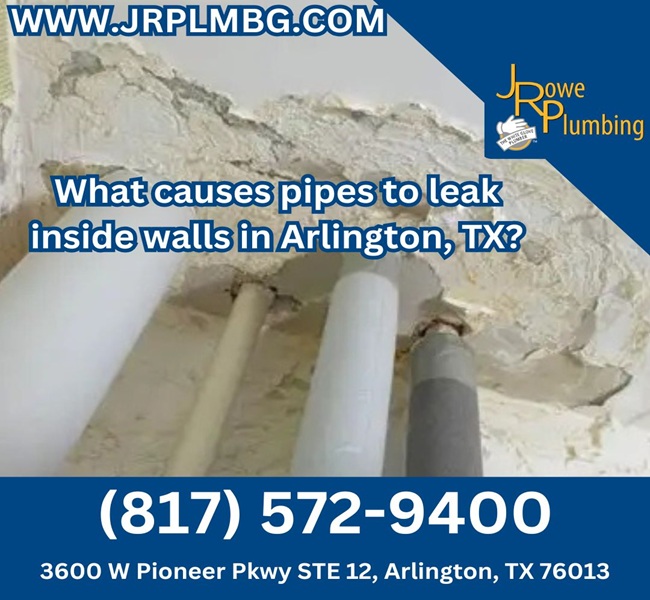
Pipes leak inside walls primarily because of corrosion, age, extreme temperature swings, high water pressure, and the kind of soil and water conditions specific to North Texas. If you are a homeowner in Arlington and you suspect something is wrong behind your walls, your instincts are likely correct and the problem deserves immediate attention. Hidden leaks are among the most damaging plumbing failures a home can experience because the water accumulates silently, long before you see any visible sign of trouble. Speaking with a trusted plumber early can make the difference between a simple repair and a costly remediation project. Understanding why these leaks happen in Arlington specifically gives you a real advantage in catching them early and protecting your property.
Why Hidden Wall Leaks Are a Serious Problem for Arlington Homeowners
The Hidden Cost of Ignoring a Leak Inside Your Walls
A slow leak inside a wall can go undetected for weeks or even months. During that time, water is soaking into wood framing, insulation, and drywall. Mold colonies can establish themselves within 24 to 48 hours of sustained moisture exposure. Structural wood begins to soften and rot, and the longer the problem continues, the more expensive and involved the repair becomes. What starts as a pinhole leak in a copper pipe can eventually compromise an entire wall section, flooring, and subfloor beneath it.
Beyond structural damage, water intrusion drives up your monthly utility bill and creates conditions that affect indoor air quality. Homeowners who delay addressing hidden leaks often discover that the repair scope is far larger than anticipated. The single most protective thing an Arlington homeowner can do is learn the warning signs and act before the water has time to spread.
How Arlington's Environment Makes Wall Leaks More Likely Than in Other Cities
Arlington sits in a region of North Texas that presents a unique combination of plumbing stressors. The municipal water supply carries some of the hardest water in the DFW metroplex, the soil under most homes is expansive clay that shifts with rainfall and drought cycles, and the area experiences temperature swings that can drop below freezing with little warning. Each of these factors accelerates the wear on your home's plumbing in ways that homeowners in more temperate or geologically stable regions simply do not face. Homes in Arlington age faster from a plumbing standpoint, and older homes in particular carry a higher risk of developing wall leaks.
The Most Common Causes of Pipes Leaking Inside Walls
Hard Water Mineral Buildup and Pipe Corrosion
How Arlington's 250 to 350 PPM Mineral Content Accelerates Pipe Deterioration
Arlington's tap water consistently measures between 250 and 350 parts per million in mineral hardness, which places it in the very hard category. That mineral content is primarily calcium and magnesium, and as water moves through your pipes day after day, those minerals deposit along interior pipe walls in a process called scaling. Over time, scale buildup creates areas of uneven pressure and accelerated corrosion, particularly in older copper and galvanized steel pipes.
The result is thinning of the pipe wall from the inside out. Eventually the pipe wall becomes thin enough that pressure causes a small breach, and the leak begins behind your wall where no one can see it. This process happens slowly and predictably, but the endpoint is always a leak if the pipe is not replaced or treated proactively.
Freeze and Thaw Pipe Damage in North Texas Winters
Why Pipes on Exterior Walls Are Most Vulnerable During Arlington Freezes
Arlington does not experience the kind of sustained deep freezes common to northern states, but the temperature drops that do occur often arrive quickly and catch homeowners unprepared. Pipes located along exterior walls or in uninsulated spaces are at serious risk when temperatures fall below 32 degrees Fahrenheit, even for just a few hours overnight.
When water inside a pipe freezes, it expands with enough force to crack the pipe wall or blow apart a joint. The damage does not always reveal itself immediately. Sometimes a pipe cracks during the freeze but does not begin leaking until the ice thaws and water pressure is restored. This delay causes homeowners to assume the freeze passed without incident, only to discover water damage in the walls days later.
Clay Soil Expansion and Pipe Joint Stress
How Ground Movement Transfers Pressure to Your Interior Plumbing
The expansive black clay soil that underlies much of Arlington and the broader DFW area absorbs water and swells significantly during wet periods, then contracts and shrinks during drought. This constant ground movement is one of the primary reasons North Texas has one of the highest rates of foundation movement in the country.
When a foundation shifts, even slightly, it stresses the pipes that pass through or near it. Supply lines running through the slab, through walls close to the foundation, or attached to fixtures near the perimeter of the home are all vulnerable. Joint connections are the most susceptible point because they are the least flexible part of a pipe run. Repeated soil movement over years can loosen or crack those joints until a leak develops.
If your home sits on expansive clay soil and you have noticed any signs of foundation settling, Slab Leak Detection is a critical step to rule out water loss occurring beneath your foundation before it migrates into your walls.
Aging Pipe Materials and Natural Wear
Galvanized, Copper, and Polybutylene Pipe Failure Timelines
The pipe material in your home has a direct relationship to your leak risk. Galvanized steel pipe, common in homes built before the 1960s, has a service life of roughly 40 to 70 years and corrodes from the inside as iron oxidizes. Copper pipe, which replaced galvanized steel through the 1970s and 1980s, lasts 50 to 70 years under normal conditions but degrades faster in hard water environments like Arlington. Polybutylene pipe, installed in many homes between the late 1970s and mid 1990s, is particularly problematic because it reacts chemically to chlorine in municipal water and becomes brittle over time, making it highly prone to cracking and splitting inside walls.
If your home was built before the mid 1990s and has never had a repipe, the probability of aging pipe failure is significant and increases each year.
High Water Pressure Damage
What PSI Levels Are Safe and When Pressure Becomes a Problem
Residential plumbing is designed to operate safely between 40 and 80 pounds per square inch. When water pressure consistently exceeds 80 PSI, it places ongoing mechanical stress on pipe walls, joints, and fixture connections. Think of it like slightly over inflating a tire every single day. The material fatigues faster than it should, and failure comes earlier than expected.
High pressure is a common but often overlooked cause of wall leaks because homeowners rarely check their home's water pressure. A pressure reducing valve that has failed or was never installed, combined with Arlington's municipal supply pressure, can quietly push your home's system well above safe operating range for months or years before a leak develops.
Loose or Corroded Pipe Joints and Fittings
Every connection point in your home's plumbing system is a potential failure location. Threaded fittings can corrode at the joint over time, solder connections can develop micro cracks through thermal expansion and contraction, and compression fittings can loosen as pipes shift. In older homes where plumbing has not been inspected in years, these joints may be operating at the edge of their integrity with no visible indication from the outside.
What begins as a weeping joint or a fixture that drips persistently is often the first visible signal of broader connection failures developing inside the wall. Addressing Leaky Faucet Repair promptly is important because a neglected drip at the fixture frequently traces back to deteriorating supply connections behind the wall surface.
Tree Root Intrusion Near Foundation Lines
Mature trees are common in Arlington's established neighborhoods, and their root systems are drawn naturally toward moisture sources including water supply lines. While root intrusion is more commonly associated with sewer lines, it can also affect water lines near the perimeter of your foundation. Roots that penetrate or compress a line can cause leaks that eventually migrate through the slab or foundation wall and into the interior of your home.
How Do You Know If a Pipe Is Leaking Inside Your Wall?
Unexplained Spikes in Your Water Bill
One of the earliest and most reliable indicators of a hidden leak is an unexplained increase in your monthly water bill without a corresponding increase in usage. If your household routine has not changed but your bill has gone up noticeably, water is likely escaping somewhere in the system. Compare three to four months of billing history and note any pattern of gradual increases, which often signal a slow developing leak rather than a sudden pipe failure.
Staining, Bubbling, or Warping on Walls and Ceilings
Water that has been accumulating inside a wall will eventually begin to show through. Brown or yellowish staining on drywall, paint that is bubbling or peeling without obvious cause, and baseboards that appear warped or soft to the touch are all signs that moisture has been present for an extended period. These signs typically indicate the leak has been active for some time and the situation is more urgent than it might appear on the surface.
Mold, Mildew, or Musty Odors in Closed Rooms
A persistent musty smell in a bathroom, bedroom, or hallway that does not resolve with ventilation is a strong indicator of hidden moisture. Mold grows inside wall cavities before it ever becomes visible on the surface, and by the time you can smell it clearly, the colony is often already established. Do not dismiss recurring odors as a cosmetic issue. They frequently point to an active leak that needs professional diagnosis.
Low Water Pressure Throughout the Home
If water pressure has decreased noticeably at multiple fixtures across your home, water may be escaping from a supply line before it reaches those fixtures. While pressure issues can have other causes, a sudden or progressive drop in pressure throughout the house rather than at just one fixture is a pattern that warrants a leak investigation.
Diagnostic Table: Wall Leak Symptoms vs. Likely Cause
| Symptom You Notice | Most Likely Underlying Cause |
|---|---|
| Unexplained water bill increase | Slow pinhole leak in supply line due to corrosion or high pressure |
| Brown staining or bubbling paint on walls | Extended moisture buildup from a leak that has been active for weeks or longer |
| Musty odor in a room without visible water | Mold growth inside wall cavity from a concealed slow leak |
| Reduced pressure at multiple fixtures | Active supply line leak reducing flow before it reaches fixtures |
| Soft or warped baseboard and drywall | Long term water saturation from a leak near the floor line or behind the wall |
Can You Fix a Leaking Pipe Inside a Wall Yourself?
What Homeowners Can Realistically Check on Their Own
There are a few steps any homeowner can take before calling a plumber. Start by turning off all water-using appliances and fixtures in your home, then observe your water meter for 15 to 30 minutes without using any water. If the meter continues to move, you have a leak somewhere in the system. You can also check under sinks for moisture, inspect accessible sections of pipe in utility rooms or crawl spaces, and monitor water pressure at outdoor hose bibs using an inexpensive gauge from a hardware store.
These steps can help confirm that a leak exists and give a plumber useful information, but they do not help you locate a leak that is concealed inside a wall.
When DIY Ends and a Licensed Plumber Must Take Over
Once a leak is confirmed inside a wall, the repair moves beyond DIY territory for several important reasons. Accessing the leak without causing unnecessary damage to your walls requires professional leak detection equipment and experience. Making the repair requires proper materials, code compliant technique, and in Texas, all plumbing repairs on pressurized lines must be performed by a licensed plumber. Attempting to open walls and repair pipe connections without the proper knowledge can result in larger damage, improperly sealed joints, and code violations that affect your homeowner's insurance coverage.
Professional Water Leak Repair ensures the source is fully addressed, the damaged section is properly replaced, and the surrounding wall cavity is assessed for moisture before it is closed back up.
How J. Rowe Plumbing Detects and Repairs Wall Leaks in Arlington, TX
Non-Invasive Leak Detection Using Sonar Equipment
J. Rowe Plumbing uses sonar-based leak detection equipment to locate leaks inside walls and beneath slabs without the need for exploratory demolition. This technology allows the plumber to precisely pinpoint the location of a leak before any wall is opened, which means less disruption to your home and a more focused repair. For Arlington homeowners dealing with the frustration of a suspected hidden leak, this approach eliminates guesswork and gets to the source efficiently.
Scheduling professional Leak Detection at the first sign of trouble is the most reliable way to confirm whether a wall leak is present and exactly where it is located before any repair work begins.
Water Line Spot Repairs vs. Full Pipe Replacement
Not every wall leak requires a whole house repipe. In many cases, a targeted spot repair on the affected section of pipe is sufficient to resolve the issue and restore normal function. J. Rowe Plumbing evaluates the condition of the surrounding pipe when performing a repair and provides honest guidance on whether a localized fix is appropriate or whether the home would benefit from a broader solution given the age and condition of the existing system.
Whole House Plumbing Inspections to Catch Hidden Problems Early
A whole house plumbing inspection is one of the most proactive steps an Arlington homeowner can take. J. Rowe Plumbing's inspection process evaluates the condition of your visible and accessible plumbing, checks water pressure, assesses pipe materials and age, and identifies any indicators of developing problems before they become active leaks. For homeowners in older Arlington neighborhoods with original plumbing still in place, this kind of inspection provides a clear picture of where the system stands and what maintenance or replacement should be prioritized.
Protecting Your Arlington Home from Future Wall Leaks
Water Filtration to Reduce Hard Water Pipe Damage
Installing a whole house water filtration or water softening system is one of the most effective long-term investments an Arlington homeowner can make to protect their plumbing. By reducing the mineral content in the water before it enters your pipes, you slow the scaling and corrosion process that leads to leaks over time. This is particularly valuable in homes with copper pipe systems that are approaching the midpoint of their expected service life.
Whole House Repipe in PEX for Long-Term Protection
For homes with aging galvanized, copper, or polybutylene plumbing, a whole house repipe using modern PEX pipe offers a lasting solution. PEX is flexible, highly resistant to the thermal expansion that stresses rigid pipe systems during Arlington's freeze events, and does not corrode in hard water conditions the way older materials do. It is one of the most significant improvements a homeowner can make to the long-term integrity of a home's plumbing infrastructure.
Steps to Take Before Arlington's Next Freeze Season
Every fall, Arlington homeowners should take a few targeted steps to reduce freeze-related pipe risk. Keep insulation on outdoor hose bibs throughout the year, not just during cold snaps. Know where your main water shutoff valve is located so you can act quickly if a pipe fails. During a hard freeze forecast, allow a slow drip from faucets on exterior walls to keep water moving through vulnerable lines. These simple habits have protected many Arlington homes from the kind of sudden, expensive wall leaks that follow a winter weather event.
Frequently Asked Questions About Pipes Leaking Inside Walls
How much does it cost to fix a leaking pipe inside a wall?
The scope and complexity of the repair determines the total investment involved. A spot repair on an accessible section of pipe is considerably less involved than a repair that requires significant wall access or involves a slab penetration. The best way to understand the cost for your specific situation is to have a licensed plumber inspect the leak, identify the source, and provide a clear breakdown of the work required. J. Rowe Plumbing's technicians carry a straightforward price guide and walk homeowners through exactly how the cost was determined.
How long can a pipe leak inside a wall before causing serious damage?
Mold can begin growing within 24 to 48 hours of sustained moisture exposure. Structural wood framing can show signs of rot within weeks of continuous water contact. A very slow leak may take months before visible symptoms appear, but the damage inside the wall is accumulating the entire time. There is no safe waiting period once a leak is suspected. The sooner it is confirmed and addressed, the less remediation will be required.
Will homeowner's insurance cover a pipe leaking inside a wall?
Coverage varies by policy and the specific cause of the leak. Most standard homeowner's insurance policies cover sudden and accidental water damage, such as a pipe that bursts unexpectedly. They typically do not cover damage caused by long-term neglect or a leak that was known and left unaddressed. Documenting when you discovered the issue and acting promptly to repair it is important for supporting any insurance claim. Consulting your policy and insurance provider directly will give you the most accurate answer for your coverage.
How do plumbers find leaks behind walls without tearing them open?
Modern leak detection technology makes it possible to locate hidden leaks with a high degree of accuracy before any wall is opened. Sonar and acoustic listening equipment detects the sound signature of water escaping under pressure through a pipe wall. Thermal imaging can identify temperature differences that indicate moisture accumulation. These tools allow a trained plumber to pinpoint the leak location, minimize the area of wall that needs to be accessed, and complete the repair with far less disruption than older methods required.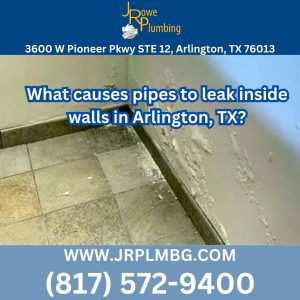
Conclusion
Pipes leak inside walls in Arlington, TX for a combination of reasons that are deeply connected to the local environment: hard water mineral corrosion, freeze and thaw stress on exterior wall pipes, expansive clay soil movement, aging pipe materials, and pressure that exceeds safe operating levels. Each of these causes is manageable when caught early and addressed by a licensed plumber with the right equipment and local experience.
If you have seen the warning signs in your home, noticed changes in your water bill, or simply want to know the condition of your plumbing before a problem develops, J. Rowe Plumbing has served Arlington homeowners since 1984 with honest assessments and dependable repairs. Visit jrplmbg.com to learn more about leak detection, water line repair, whole house inspections, and the full range of residential plumbing services available for your home.


