


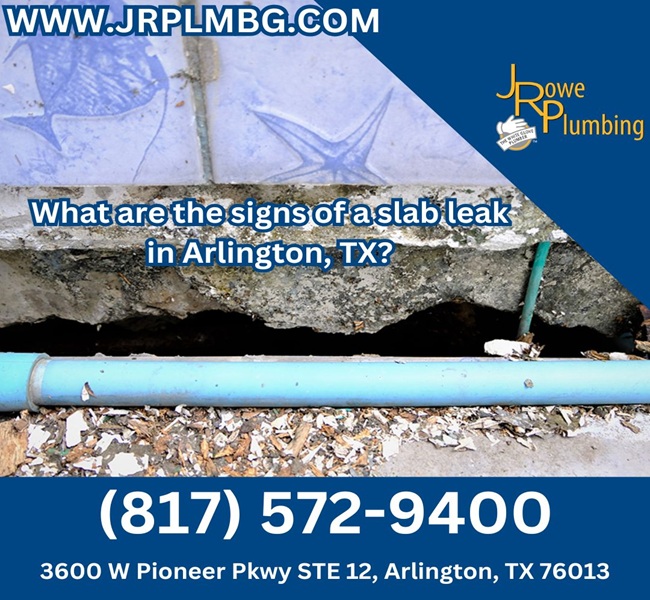
A slab leak occurs when a water line beneath your concrete foundation develops a break or pinhole,
allowing water to seep silently into the ground below your home or property. The signs are not always
dramatic, which is precisely what makes slab leaks so destructive. A spike in your water bill, warm
patches on the floor, or the faint sound of running water when every faucet is off are all signals
that something is wrong under the slab. For homeowners and property managers in Arlington, TX,
recognizing these warning signs early is the difference between calling a qualified plumber for a targeted repair and facing a foundation
crisis that disrupts everything above it.
Why Arlington Properties Are More Susceptible to Slab Leaks
Slab leaks happen in every city, but certain local conditions make them more common and more severe in the Arlington area. Two factors stand above the rest: the soil beneath the foundation and the age of the pipes running through it. Understanding these factors is one of the most important steps homeowners can take, much like the preventative strategies discussed in 6 Plumbing Projects, to reduce the risk of major plumbing damage and costly foundation repairs..
Expansive Tarrant County Clay Soil Puts Constant Pressure on Foundation Pipes
Tarrant County sits on some of the most reactive clay soil in North Texas. When rainfall is heavy,
that soil absorbs moisture and swells. During the dry stretches that Arlington summers are known for,
it contracts and pulls away from the foundation. This cycle of expansion and contraction is relentless,
and the pipes embedded in your concrete slab move with it. Over years of that repeated shifting,
even well-installed copper or galvanized lines develop stress fractures and small separations at joints.
The foundation itself may look unchanged from the surface while water has already been escaping
underground for weeks or months.
Aging Pipe Materials in Pre-1990 Homes Create Added Risk
A large portion of Arlington's residential housing stock was built before 1990. Many of those homes
still have their original copper or galvanized steel water lines running beneath the slab. Copper,
while durable, corrodes over time when exposed to Arlington's hard water, which carries 250 to 350
parts per million of dissolved minerals. That mineral content accelerates pitting on the interior
wall of the pipe until the wall eventually fails. If your property was built before 1990 and has
never had a repipe, the pipes under your slab are operating well past their designed service life, making proactive Leak Detection a worthwhile precaution.
7 Warning Signs of a Slab Leak You Should Not Ignore
Slab leaks rarely announce themselves with a visible flood. Instead, they communicate through a
series of subtle, easy-to-dismiss symptoms. Here are the seven most common indicators that a pipe
beneath your slab may be compromised.
Your Water Bill Has Spiked With No Clear Explanation
One of the earliest and most reliable indicators of a slab leak is a sudden and unexplained increase
in your monthly water bill. If your usage habits have not changed but your bill has climbed noticeably,
water is escaping somewhere in the system. A slab leak can release hundreds of gallons per day into
the ground beneath your foundation without a single drop appearing inside your home. Comparing two
or three consecutive bills against the same period from the prior year is a quick way to identify
an upward trend that cannot be explained by seasonal watering or appliance changes.
You Hear Running Water When All Fixtures Are Off
Turn off every faucet, appliance, and fixture in the building. Stand in a quiet room close to the
floor and listen. A faint hissing, rushing, or trickling sound when the entire system should be
silent is a strong indicator that water is moving somewhere it should not be. Some property owners
describe it as a low-frequency hum coming from the floor itself. This sound is water under pressure
escaping through a break in the line and traveling through the soil beneath the slab.
Warm or Hot Spots on Your Floor
If a hot water line is the one that has failed, the escaping heated water warms the concrete above
it. Walking across a tiled or hardwood floor and feeling an isolated warm patch, especially one that
stays warm regardless of season or time of day, points directly to a hot water slab leak beneath
that spot. This symptom is particularly identifiable on tile floors where the temperature contrast
with surrounding areas is more noticeable.
Damp Flooring or Unexplained Wet Spots
When a slab leak is active long enough, moisture eventually migrates upward through the concrete
and reaches the flooring material above. Hardwood floors may begin to buckle or warp. Carpet may
feel damp or develop a soggy texture in a specific area without any spill or plumbing fixture nearby.
Tile grout may show dark staining along its joints. These moisture patterns are not random. They
trace directly back to the location of the break in the line below.
Low Water Pressure Throughout the Property
A slab leak acts as an uncontrolled pressure release in your water supply system. Because water
is escaping through the break before it ever reaches your fixtures, the pressure at every faucet
and showerhead in the building drops. If you have noticed a gradual reduction in pressure at
multiple points throughout the home or rental unit, and the municipal supply pressure is normal,
the loss is likely occurring somewhere between the meter and the fixtures. A slab leak is one of
the most common causes of that pattern.
Cracks Appearing in Walls, Tile, or the Foundation
Water that escapes beneath a slab does not simply disappear. It saturates the soil, displaces
material, and creates voids that cause the foundation to settle unevenly. As the slab shifts,
the structure above it responds. New cracks in drywall, particularly diagonal cracks running
from the corners of door frames or windows, are worth investigating. Tile that was previously
intact and begins cracking in a line pattern, or grout joints that separate without any impact
or force, can also be early indicators of foundation movement caused by long-term water intrusion.
Musty Odors or Early Signs of Mold Near the Floor
Concrete is porous. A persistent slab leak creates a continuously damp environment at the base
of your walls and beneath your flooring. Mold and mildew do not need much to establish themselves:
a moisture source, a surface, and time. A musty smell concentrated near the floor, discoloration
at the base of baseboards, or visible mold growth along the lower portion of a wall are all signs
that moisture has been present long enough to support biological growth. That moisture, in the
absence of any other source, is almost always coming from below.
Slab Leak or Something Else? A Quick Diagnostic Guide
Use the table below to help identify whether your symptoms point to a slab leak or another common plumbing issue.
| Symptom | Most Likely Cause |
|---|---|
| Unexplained spike in water bill with no visible leak | Slab leak or underground water line failure |
| Sound of running water when all fixtures are off | Slab leak, running toilet, or failed fill valve |
| Isolated warm patch on floor not near a heat vent | Hot water slab leak beneath that section of slab |
| Damp carpet or warped hardwood in one area | Slab leak, appliance supply line failure, or roof intrusion |
| New diagonal wall cracks or separating tile grout | Foundation settlement caused by slab leak or soil shift |
What Happens If a Slab Leak Goes Unaddressed
Every day a slab leak continues without detection, the scope of damage grows. What begins as a
pinhole in a copper line eventually becomes a structural and environmental problem that affects
the entire property. Understanding the downstream consequences helps frame why early action is
not optional.
Foundation Damage That Compounds Over Time
The concrete slab that supports your home or building is engineered to bear weight evenly across
a stable base. When water erodes the soil beneath one section of that slab, the load bearing
shifts. The slab begins to settle unevenly, producing cracks in the concrete itself and in
everything attached to it. Doors and windows that previously closed smoothly begin to stick or
fall out of alignment. In severe cases, portions of the slab can heave or sink enough to require
significant structural remediation. Foundation repair in North Texas is a substantial undertaking,
and the work is far more disruptive than the Water Leak Repair that could have
prevented it.
Mold Growth and Air Quality Concerns for Occupants
A slab leak that persists for weeks or months creates a chronic moisture environment at the lowest
level of the structure. That moisture works its way into wall cavities, subfloor materials, and
insulation. Mold colonies that establish themselves in those hidden spaces are not easily visible,
but the air quality effects are measurable. Occupants, whether a homeowner's family or tenants in
a rental property, may experience respiratory irritation, worsening allergy symptoms, or persistent
headaches without any clear cause. Remediation of established mold growth requires far more than
fixing the pipe. It often involves removing and replacing affected building materials, which
significantly increases both cost and disruption.
How J. Rowe Plumbing Detects Slab Leaks in Arlington, TX
Locating a leak beneath a concrete slab once required breaking through the foundation at multiple
points to narrow down the source. That approach is invasive, time-consuming, and unnecessary with
modern detection equipment.
Non-Invasive Sonar Leak Detection Technology
J. Rowe Plumbing uses sonar-based Slab Leak Detection equipment to pinpoint the exact location of a
water line failure beneath the slab before any concrete is touched. The technology listens for
the acoustic signature of pressurized water escaping through a break in the line and triangulates
the source with precision. This means the excavation or access point, when needed, is targeted
and minimal. Homeowners and property managers are not left with a floor that looks like a
construction site. The process is methodical, accurate, and designed to minimize disruption to
the property throughout the diagnostic phase.
Serving Arlington Homeowners and Property Managers Since 1984
J. Rowe Plumbing has been working in Arlington and the surrounding Tarrant County area since
James Rowe founded the company in 1984. That four-decade presence means the team understands
local soil conditions, the pipe materials common to different eras of construction, and the
patterns that Arlington properties tend to develop as they age. Whether you are a homeowner
managing a single-family residence or a property manager overseeing multiple units, that
depth of local experience translates directly into faster diagnosis and more reliable repairs.
J. Rowe Plumbing holds a BBB A+ rating and has earned recognition as a Nextdoor Neighborhood
Favorite across multiple years, reflecting the kind of consistent, integrity-driven service
that keeps Arlington residents calling the same company decade after decade.
If your property is showing any of the symptoms described in this post, the most important
step is to have a licensed plumber perform a proper leak detection before the situation
progresses. Slab leaks do not resolve on their own, and the longer the water continues to
move beneath the foundation, the more complex and involved the repair becomes. J. Rowe
Plumbing serves Arlington homeowners and property managers with same-day responsiveness
during business hours and brings the diagnostic equipment needed to find the problem
without unnecessary guesswork. Reach out through jrplmbg.com to learn more about our Plumbing Services or to schedule your leak
detection and get a clear picture of what is happening beneath your slab.


