


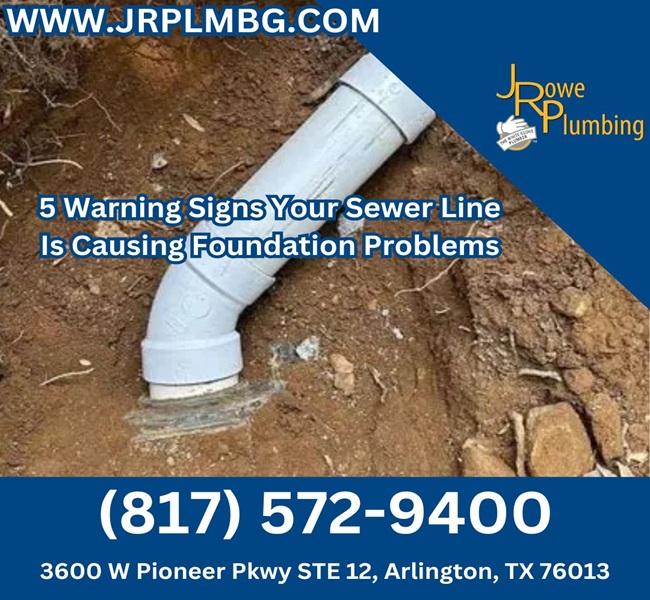
A damaged sewer line beneath your home can absolutely cause serious foundation problems, and the connection between the two is more common than most homeowners realize. When a sewer line breaks, cracks, or begins leaking underground, water quietly saturates the soil beneath your slab. Over time, that soil shifts, compresses, or washes away entirely, and your foundation moves with it. The consequences range from hairline cracks in your walls to doors that will not close properly to full structural instability. If you have noticed unexplained changes in your home, contacting a plumber is the most important step toward finding out whether your sewer line is at the center of the problem.
Why a Broken Sewer Line Is a Foundation Problem, Not Just a Plumbing Problem
Most homeowners think of sewer line damage as a plumbing inconvenience. Slow drains, unpleasant smells, gurgling pipes. What they do not always consider is what is happening underground while those symptoms appear. A leaking sewer line does not just affect water flow. It changes the physical condition of the soil your entire home rests on.
Foundations depend on stable, consistent soil beneath them. When that soil is repeatedly saturated with water from a leaking pipe, its load-bearing capacity decreases. Pockets of void can form. Settlement becomes uneven. The result is a home that begins to shift in ways it was never designed to.
How a Leaking Sewer Line Erodes the Soil Under Your Home
Underground pipe leaks introduce a constant, slow stream of water into the soil directly beneath your slab. That water does not stay in one place. It migrates through the soil column, carrying fine particles with it. This process, known as soil piping or erosion, gradually removes the material that supports your foundation. Where soil once existed, voids begin to form. When the concrete slab above loses that support, it begins to sink, crack, or tilt.
The damage rarely happens all at once. It accumulates over months or years, which is exactly what makes it so dangerous. By the time visible signs appear at the surface level, the erosion beneath the slab may already be significant.
Why Clay Soil Makes the Damage Worse and Faster
In North Texas, homes are built on expansive clay soil. This soil type is particularly reactive to moisture. When it absorbs water, it swells. When it dries out, it contracts and pulls away from structures. This natural movement cycle already puts pressure on foundations even under normal conditions.
Add a leaking sewer line to that equation and the problem compounds. The constant introduction of moisture from a broken pipe causes repeated swelling and contraction in localized areas beneath the slab. That uneven movement accelerates foundation stress at a rate that would not occur in more stable soil conditions. Homes built before 1990, which represent a large portion of the housing stock in the greater Arlington area, are especially vulnerable because their original pipe materials have had decades to degrade.
Sign 1: Cracks in Your Walls, Floors, or Foundation
Cracks in your home's interior or exterior surfaces are one of the most visible indicators that something is affecting your foundation. They deserve attention, not because every crack is a crisis, but because some cracks are direct evidence of structural movement that needs to be investigated at its source.
How to Tell If a Crack Is Structural or Just Cosmetic
Cosmetic cracks are typically fine, shallow, and appear in plaster or paint as a home settles naturally over time. They are generally horizontal or slightly diagonal and do not grow. Structural cracks are a different matter. These tend to be wider than a quarter inch, appear in stair-step patterns along brick or block walls, or run diagonally from the corners of windows and doors. They may grow over time and are often accompanied by other warning signs such as uneven floors or sticking doors.
The Difference Between Settlement Cracks and Sewer-Related Cracks
Standard settlement occurs gradually and uniformly as a structure ages. Sewer-related foundation damage tends to produce more concentrated cracking in specific areas of the home, particularly in sections directly above where the pipe has failed. If cracks are appearing in a cluster or seem to be growing on one side of the home more than the other, that asymmetry is a meaningful clue. Combine that with other symptoms below, and a sewer line inspection is a logical next step.
Sign 2: Soggy, Sunken, or Unusually Soft Spots in Your Yard
Your yard can tell you a great deal about what is happening underground. If you notice areas of your lawn that stay wet long after rain, sink noticeably underfoot, or develop depressions without an obvious cause, a broken sewer line may be releasing water beneath the surface.
What Soil Saturation from a Sewer Leak Looks Like
A saturated area caused by a sewer leak will often feel spongy or soft when you walk across it. You may notice the grass growing unusually green or lush in one section of the yard compared to surrounding areas. In more advanced cases, visible sinkholes or depressions form above the leak site. These are signs that the soil beneath has been displaced or eroded by continuous water exposure.
How to Distinguish a Sewer Leak from a Drainage Problem
Drainage problems typically appear after rain events and resolve within a day or two as water disperses. A sewer leak, by contrast, maintains soil moisture even during dry periods. If a soft or wet spot in your yard persists through a week of dry weather, you are not dealing with a drainage issue. The moisture source is underground, and it is not going away on its own without professional Sewer Line Repair.
Sign 3: Doors and Windows That Stick or No Longer Close Properly
When a foundation shifts, even slightly, the structural geometry of your entire home changes with it. Door frames and window frames are among the first places where that change becomes physically noticeable and frustrating to live with.
Why Foundation Shifts Affect Door and Window Frames
Doors and windows are installed within frames that are designed around a square, level structure. When foundation movement causes one section of the home to drop or rise relative to another, those frames go out of square. The result is a door that drags along the floor, a window that will not slide smoothly, or gaps that appear along the top or side of a door frame where none existed before. These are not cosmetic problems. They are physical evidence that the structure beneath them has moved.
Other Structural Red Flags Connected to Sewer Line Damage
Beyond doors and windows, look for gaps forming between your walls and ceiling, floor tiles that have cracked without impact, or sections of hardwood flooring that have buckled or separated. You may also notice that cabinets that previously closed flush now have doors that do not quite align. Each of these signs points to movement in the underlying structure, and if they appear alongside any of the other warning signs in this article, a professional evaluation that may include Slab Leak Detection is warranted.
Sign 4: Persistent Sewer Odors Inside or Near Your Home
A foul smell that you cannot locate and cannot eliminate is never something to ignore. When a sewer line breaks beneath or near your home, it does not just leak water. It releases sewer gas, and that gas can migrate upward through the soil and into your living space.
What Causes Sewer Gas to Enter a Structure
Sewer gas is a mixture that includes hydrogen sulfide, methane, and other byproducts of organic waste decomposition. Under normal conditions, a properly functioning sewer line contains these gases and routes them safely away from the structure. When a line cracks or separates, those gases escape into the surrounding soil. From there, they can travel through the slab via cracks, gaps around utility penetrations, or other small openings and enter the home's air supply.
Why a Sewage Smell Should Never Be Ignored
Beyond the obvious discomfort of living with the odor, sewer gas poses real health concerns. Hydrogen sulfide is toxic at sufficient concentrations. Methane is flammable. More immediately, the presence of sewer odors inside the home is a reliable indicator that there is a breach somewhere in the system. That breach needs to be located and addressed before the structural or health consequences worsen.
Sign 5: Recurring Drain Backups or Slow Drains Across Multiple Fixtures
A single slow drain is usually a localized clog that routine Drain Cleaning can resolve. When multiple drains in your home are backing up or draining slowly at the same time, the problem is almost never inside the walls. It is in the main sewer line.
The Difference Between an Isolated Clog and a Failing Sewer Line
An isolated clog affects one fixture. Your bathroom sink is slow, but the tub drains fine, and the toilet flushes normally. A failing main sewer line creates symptoms across multiple fixtures simultaneously because all of them share the same exit point from the home. If you flush the toilet and water backs up into the tub, or if running the washing machine causes the kitchen sink to gurgle, your main sewer line is the common factor.
This kind of recurring backup often indicates a structural problem with the pipe itself: a collapse, a severe root intrusion, or a section that has separated from joint movement caused by the same soil instability affecting your foundation.
What a Camera Inspection Reveals That the Eye Cannot
A video camera inspection of your sewer line is the most direct way to confirm what is happening underground without excavation. A small camera is fed through the line from a cleanout access point, transmitting live footage of the pipe's interior. This footage can reveal cracks, root intrusion, bellied sections where the pipe has sagged due to soil movement, separated joints, and collapsed sections. It is the diagnostic tool that removes guesswork and allows a plumber to pinpoint the exact location and nature of the problem before any repair work begins.
Warning Sign Severity at a Glance
| Warning Sign | What It May Indicate |
|---|---|
| Cracks in walls, floors, or foundation | Soil erosion or void formation beneath the slab from a leaking underground pipe |
| Soggy or sunken spots in the yard | Continuous underground water release saturating and displacing soil near the pipe break |
| Sticking doors and windows | Foundation shift caused by uneven soil settlement from sustained moisture |
| Persistent sewer odors inside the home | Pipe breach allowing sewer gas to migrate upward through the slab into living areas |
| Recurring slow drains or backups in multiple fixtures | Main sewer line deterioration affecting the entire drain system simultaneously |
What to Do If You Spot Any of These Signs
Noticing one of these signs may or may not indicate a sewer line problem. Noticing two or more at the same time is a meaningful pattern that deserves professional attention. The key is not to wait. The longer a sewer line leak goes unaddressed, the more soil is displaced, and the more expensive the resulting foundation repair becomes.
Why Early Detection Prevents the Most Expensive Repairs
Foundation repair is costly and time-intensive. The work required to stabilize a slab after significant soil erosion often involves structural engineers, pier systems, and extended timelines. Sewer line repair, by comparison, is a far more contained and manageable process, particularly when caught early. Addressing a cracked or separated pipe before it has had years to erode the surrounding soil is the difference between a repair and a complete structural remediation.
This is particularly relevant in North Texas, where the clay soil already creates natural pressure on foundations. A compromised sewer line in this environment accelerates damage that might take decades elsewhere. Early intervention is not just a cost consideration. It is a structural one.
How a Professional Sewer Line Inspection Works
A licensed plumber will typically begin with a camera inspection of your main sewer line. This process is non-invasive and does not require any digging. The camera footage gives a clear view of the pipe's interior condition and helps identify the location and severity of any damage. If a problem is found, the plumber can discuss repair options appropriate to the specific situation, whether that is a targeted spot repair, trenchless pipe replacement, or a full line replacement.
At J. Rowe Plumbing, our team has been providing sewer line leak detection and repair services since 1984, with the professional licensing and hands-on experience to diagnose these problems accurately and efficiently. Our trucks are fully stocked, and we schedule within a two-hour arrival window so you are not waiting around all day for answers.
Frequently Asked Questions
Can a sewer line leak really damage a home's foundation?
Yes. When a sewer line breaks beneath or near a home, the escaping water saturates the surrounding soil over time. That sustained moisture disrupts the soil's load-bearing capacity and causes uneven settlement beneath the slab. The result can range from cosmetic cracking to significant structural movement if the leak is not addressed.
How long does it take for a sewer leak to cause foundation damage?
There is no single timeline. It depends on the severity of the leak, the soil type beneath the home, and the construction of the foundation itself. In North Texas, where expansive clay soil is the norm, the process can be faster than in regions with more stable soil conditions. Some homeowners see structural symptoms within months of a significant break. Others experience slower, cumulative damage over years. The earlier the leak is detected, the less foundation damage occurs.
Do I need a plumber or a foundation specialist first?
Start with a licensed plumber. If a sewer line leak is the root cause of the foundation movement, addressing the plumbing problem first is essential. Repairing the foundation before fixing the leak would be like treating a symptom while leaving the cause in place. Once the sewer line is repaired and the moisture source is eliminated, a foundation specialist can assess whether additional stabilization work is needed.
Is a camera inspection the only way to diagnose a sewer line problem?
A camera inspection is the most reliable non-invasive diagnostic method available. It allows a plumber to see the actual interior condition of the pipe without any digging. Other tools, including professional Leak Detection and smoke testing, can help identify leak locations, but the camera provides the clearest picture of what is happening and where. Most sewer line evaluations begin with a camera inspection for exactly that reason.

Understanding the Connection Protects Your Home
The five warning signs covered in this article, including cracks in your walls or foundation, soft spots in your yard, sticking doors and windows, sewer odors inside the home, and recurring drain backups, are not unrelated problems. When they appear together, they often trace back to a single source: a compromised sewer line affecting the stability of the soil beneath your home.
The good news is that this is a diagnosable problem. A professional camera inspection takes the guesswork out of the equation and allows your plumber to give you a clear picture of what is happening underground before any repair decisions are made.
J. Rowe Plumbing has served homeowners across the Arlington area and greater DFW metroplex since 1984. Our licensed team brings decades of hands-on sewer line experience to every inspection and repair. If you have noticed any of the warning signs described here, contact J. Rowe Plumbing to schedule a sewer line evaluation. Getting to the root of the problem early is the most effective way to protect your home and avoid far more extensive repairs down the road. Visit us at jrplmbg.com to learn more about our services and how we can help.


