


Tankless Water Heater Installation Arlington
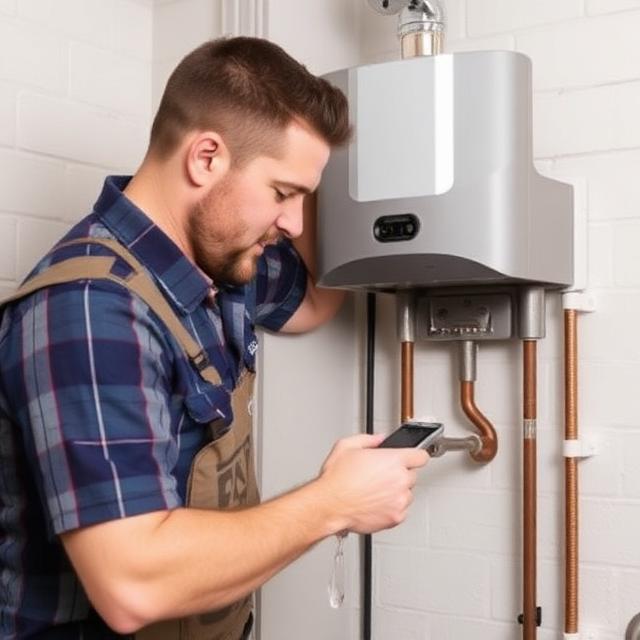
Upgrading to a tankless water heater transforms how your Arlington, TX home delivers hot water. Unlike traditional tank systems that store and continuously heat 40 to 80 gallons of water, tankless water heaters provide on-demand water heating only when you need it. This shift from standby heating to instant delivery can cut your water-heating energy costs by 24 to 34 percent for homes that use 41 gallons or less of hot water daily.
Understanding Tankless Water Heater Efficiency and Energy Savings
Traditional tank water heaters maintain a reservoir of hot water 24 hours a day, cycling on whenever stored water drops below the thermostat set point. This standby energy loss accounts for 10 to 20 percent of total heating costs. Tankless water heaters eliminate standby loss by heating water only when a faucet, shower, or appliance calls for hot water. When you open a hot water tap, cold water flows through the tankless heater's heat exchanger, where gas burners or electric elements rapidly raise the temperature to your preset level. The result is continuous hot water without the limitations of a 50-gallon tank.
Energy efficiency gains depend on your household's usage profile. Homes that use less hot water see the greatest percentage savings because tankless heaters avoid all standby losses. Larger households with simultaneous demands, such as multiple showers running during morning routines or dishwasher and laundry overlapping, benefit from installing multiple tankless heaters or selecting whole-house models with higher gallons-per-minute GPM ratings. Gas tankless water heaters typically deliver 5 to 10 GPM, while electric tankless units output 2 to 5 GPM depending on the temperature rise required in Arlington's climate. Our team evaluates your peak demand scenarios to recommend properly sized equipment that prevents the cold-water sandwich effect and temperature drop complaints.
Gas vs. Electric Tankless Heater Installation: Fuel Type Selection
Gas tankless heater installation dominates the market in Arlington because natural gas costs less per BTU than electricity and because gas units handle higher flow rates. A typical gas demand water heater outputs 150,000 to 199,000 BTUs, enough to serve a whole-house demand of 7 to 10 GPM even during winter months when incoming water temperature drops. Installing a gas tankless water heater requires adequate gas supply, often upgrading from a 1/2-inch to a 3/4-inch gas line, and proper venting through the roof or an exterior wall using stainless steel Category III venting or PVC for condensing models.
Electric tankless heaters appeal to homeowners without gas service or those installing point-of-use heaters for a remote bathroom or kitchen sink. Electric units eliminate venting concerns and combustion air requirements, but they demand substantial electrical capacity. Whole-house electric tankless water heaters draw 80 to 150 amps, frequently requiring a service panel upgrade from 100 amps to 200 amps. Point-of-use electric tankless models drawing 20 to 40 amps work well for powder rooms or garage sinks where hot water demand remains modest. Our electricians coordinate with your utility provider to confirm available capacity before installing electric tankless water heaters that could overload your existing electrical systems.
Condensing vs. Non-Condensing Tankless Water Heating Technology
Condensing tankless water heaters capture waste heat from exhaust gases, achieving energy efficiency ratings above 0.90. These units route flue gases through a secondary heat exchanger, extracting additional energy and lowering exhaust temperature to 100 to 120°F. The cooler exhaust allows PVC venting instead of stainless steel, and the captured energy reduces gas consumption. The tradeoff is condensate, since every gallon of gas burned produces roughly one gallon of acidic condensate that must drain to a floor drain, condensate pump, or exterior discharge point meeting local codes.
Non-condensing tankless heaters vent exhaust at 300 to 400°F, requiring Category III stainless steel venting that resists high temperatures. These units cost less upfront and avoid condensate drain complexity, but their 0.82 to 0.85 energy factor results in higher monthly utility costs. For retrofit installations in homes without convenient condensate routing, non-condensing tankless water heaters often prove simpler and more cost-effective despite the efficiency difference. Our plumbing technicians assess your drain access, venting path, and long-term energy goals to recommend the condensing or non-condensing design that best fits your budget and home layout.
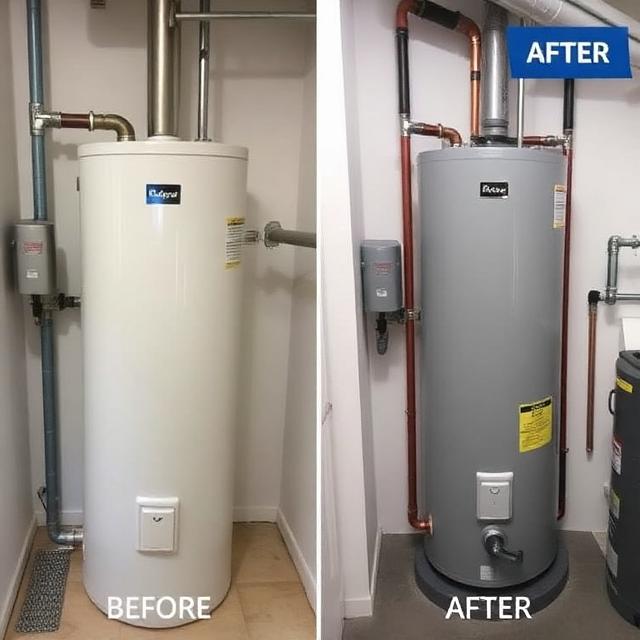
Heater Installation Process: From Sizing to Calibration
Professional tankless water heater installation begins with accurate load calculation. We document every hot water fixture in your Arlington, TX home, including showers, tubs, kitchen sink, dishwasher, clothes washer, and bathroom sinks, and assign each a flow rate. Showers typically demand 2.0 to 2.5 GPM, kitchen sinks 1.5 GPM, and dishwashers 1.0 GPM. Adding simultaneous uses reveals your peak demand. A family running two showers at 5 GPM plus a dishwasher at 1 GPM requires a tankless heater rated for at least 6 GPM at the desired temperature rise. In Arlington, groundwater enters your home at 55 to 65°F in winter, so raising it to 120°F delivery requires a 55 to 65°F temperature rise.
After sizing, we prepare your home's infrastructure. Gas pressure testing confirms your meter and supply line can deliver the required BTUs. Electrical system inspection verifies that your panel can handle the heater's ignition system, control board, and any recirculation pump. We install shutoff valves on both cold and hot water lines for future maintenance, mount the tankless heater on an exterior or interior wall with proper clearances, and route venting per manufacturer specifications. Condensing tankless water heaters get a dedicated condensate drain line, often with a neutralization cartridge to prevent acidic condensate from damaging plumbing. Gas line installation or electrical wiring completes the rough-in phase before we connect water lines and test the system.
Permitting and Code Compliance for Heater Installations in Arlington
The City of Arlington requires a plumbing permit for tankless water heater replacement and a separate gas permit if you are installing or modifying gas lines. Electric tankless heaters need an electrical permit when adding new circuits or upgrading your service panel. Our licensed plumbers pull permits on your behalf, schedule inspections, and ensure all work meets the International Plumbing Code and local amendments adopted by Arlington. Inspectors verify proper venting termination distances from windows and property lines, adequate combustion air supply for gas units, correct gas pipe sizing, and compliant condensate drainage.
Skipping permits may seem faster, but unpermitted work creates liability. If a future buyer's inspector discovers unpermitted heater installation, you may face costly retroactive permits, reinspection fees, or even removal and reinstallation to meet code. Insurance claims related to gas leaks or electrical faults can be denied if the installation lacked required permits. We handle all permitting paperwork, inspection coordination, and code compliance documentation so your tankless water heater installation adds value to your Arlington home without legal or safety risks.
Venting, Combustion Air, and Gas Line Upgrades for Tankless Systems
Gas tankless water heaters consume 150,000 to 199,000 BTUs during operation, requiring substantial combustion air. Indoor installations in mechanical closets or utility rooms must provide two permanent openings, one near the floor and one near the ceiling, each with at least one square inch of free area per 1,000 BTUs. Alternatively, outdoor tankless heaters eliminate combustion air concerns but require freeze protection and weatherproof enclosures. Arlington's mild winters make outdoor installation viable with proper insulation and low-temperature cutoff settings.
Venting path length and configuration affect performance and safety. Condensing tankless water heaters vent through Schedule 40 PVC, CPVC, or polypropylene piping, with maximum equivalent lengths specified by the manufacturer, typically 60 to 100 feet depending on the number of elbows. Non-condensing units require Type B or stainless steel venting with shorter maximum lengths due to higher exhaust temperatures. We calculate total equivalent length, accounting for each elbow and every foot of horizontal run, to ensure your tankless heater vents properly and passes inspection. Inadequate venting causes exhaust gas spillage, carbon monoxide hazards, and premature heat exchanger failure.
Tankless Water Heater Installation Cost and Pricing Factors
The total cost to install a tankless water heater in Arlington depends on fuel type, capacity, installation complexity, and necessary infrastructure upgrades. Gas tankless water heaters range from 800 to 1,500 dollars for the equipment, while whole-house electric tankless units cost 500 to 1,000 dollars. Installation labor typically adds 1,200 to 3,500 dollars depending on whether you need gas line replacement, electrical panel upgrades, new venting installation, or structural modifications to mount the heater. A straightforward gas tankless replacement with an existing 3/4-inch gas line and accessible venting may total 2,500 to 3,500 dollars, while a complex heater installation requiring a gas meter upgrade, 200-amp panel installation, and extensive venting rework can exceed 6,000 dollars.
Several infrastructure upgrades commonly accompany tankless water heater installation. Upgrading from a 1/2-inch to a 3/4-inch gas line costs 400 to 900 dollars depending on distance from the meter. Electrical panel upgrades from 100 amps to 200 amps run 1,500 to 3,000 dollars. Installing a dedicated condensate pump for units without gravity drainage to a floor drain adds 200 to 400 dollars. Water softener installation, often recommended to protect tankless heat exchangers from scale buildup in Arlington's moderately hard water, adds 800 to 2,500 dollars depending on system capacity and features. While these costs are significant, the 15 to 20 year lifespan of tankless water heaters and ongoing energy savings often justify the upfront investment.
Rebates and Incentives for High-Efficiency Heating Systems
Federal tax credits under the Inflation Reduction Act provide up to 600 dollars for installing an Energy Star certified electric or natural gas tankless water heater meeting efficiency thresholds 0.95+ Uniform Energy Factor for electric units and 0.90+ for gas units. These credits reduce your net cost and shorten payback periods. Local utility providers sometimes offer additional rebates. Check with Atmos Energy or your electric cooperative for current programs. Combining federal tax credits with utility rebates can offset 600 to 1,000 dollars of your total installation cost, making high-efficiency condensing tankless heaters more affordable.
Homeowners replacing old inefficient tank water heaters with Energy Factor ratings below 0.60 see the fastest return on investment. If your existing tank heater is near the end of its 10 to 12 year lifespan, upgrading to a tankless model before failure avoids emergency replacement premiums and takes advantage of current incentive programs. We help you identify applicable rebates, complete paperwork, and document installation details required for tax credit claims.
Repair and Maintenance Requirements for Tankless Systems
Annual maintenance extends the lifespan of tankless water heaters and preserves efficiency. The most critical service task is descaling the heat exchanger. Mineral deposits from hard water accumulate on the heat exchanger fins, insulating them from water flow and reducing heat transfer. In water supplies with hardness typically 120 to 180 mg/L, scale buildup becomes noticeable within 1 to 2 years without proper repair and maintenance. We flush tankless water heaters annually using a descaling pump and food-grade citric acid or vinegar solution, circulating the cleaning agent through the heat exchanger for 45 to 60 minutes to dissolve calcium and magnesium deposits.
Additional maintenance tasks include inspecting the air intake filter, cleaning or replacing as needed, checking the igniter and flame sensor for corrosion, testing the pressure relief valve, verifying proper gas pressure and combustion, and inspecting venting for obstructions or damage. Condensing tankless water heaters require condensate drain cleaning and neutralizer cartridge replacement every 12 to 18 months. Neglecting these maintenance steps leads to reduced flow rates, inconsistent water temperature, error codes, and premature component failure. Our annual maintenance plans include all necessary service tasks, priority scheduling, and parts discounts to keep your tankless system operating at peak efficiency.
Common Demand Water Heater Problems and Solutions
Temperature fluctuation often called cold water sandwich occurs when someone briefly closes and reopens a hot water tap. The tankless heater shuts down after the initial demand, then takes a few seconds to reignite when flow resumes. Cold water already in the pipes reaches the faucet before newly heated water arrives. Solutions include installing a small recirculation loop with a buffer tank, adjusting flow rates above the heater's minimum activation threshold, or using thermostatic mixing valves to stabilize outlet temperature. Our technicians diagnose the root cause, undersized unit, improper calibration, or normal system behavior, and recommend the most cost-effective remedy.
Error codes indicating ignition failure, flame failure, or overheating often point to gas pressure issues, dirty flame sensors, blocked venting, or scale buildup. Low gas pressure prevents proper ignition. We test pressure under load and coordinate with your utility if supply issues exist. Dirty flame sensors cause intermittent shutdowns. Cleaning the sensor rod restores reliable operation. Blocked venting triggers safety shutoffs. We inspect the vent path for bird nests, insulation contact, or improper termination. Scale buildup reduces flow and triggers overheat protection. Descaling service resolves the issue. Prompt diagnosis prevents minor problems from causing expensive component damage.
- Temperature Fluctuation: Install recirculation loop, adjust minimum flow rate, or check for undersized unit
- Ignition Failure: Verify gas pressure, clean igniter, check electrical system connections
- Flame Sensor Error: Clean sensor rod, inspect flame rod gap, confirm proper combustion air
- Overheating Shutdown: Descale heat exchanger, verify adequate water flow, check inlet filter
- Low Flow Rate: Clean inlet screen, descale heat exchanger, check for partially closed valves
- Condensate Drain Backup: Clear drain line, replace neutralizer cartridge, verify proper slope
Heater Installs for High-Demand Homes: Multiple Unit Systems
Homes with 3+ bathrooms, luxury showers with body sprays, or simultaneous laundry and dishwasher use may exceed the capacity of a single whole-house tankless water heater. Rather than installing an oversized commercial unit, many Arlington homeowners choose parallel tankless water heater systems. Two mid-capacity gas tankless units plumbed in parallel deliver combined flow rates of 10–14 GPM while providing redundancy. If one heater requires service, the other continues supplying hot water. Parallel systems also allow staged installation. Install one tankless heater now, add a second later if demand grows.
Point-of-use electric tankless water heaters supplement whole-house systems for remote fixtures. Installing a small electric tankless heater under a master bathroom vanity or near a kitchen island eliminates the lag time while hot water travels from a distant central heater. These dedicated units deliver instant hot water to specific fixtures without requiring recirculation pumps, saving water and reducing wait times. We design hybrid systems combining a central gas tankless heater for showers and laundry with point-of-use electric heaters for sinks, optimizing energy efficiency and convenience throughout your Arlington home.
Recirculation Systems and Instant Hot Water Delivery
Recirculation pumps paired with tankless water heaters eliminate the cold-water wait at distant fixtures. A recirculation loop continuously moves hot water from the heater through the plumbing and back, keeping hot water near every faucet. Dedicated return lines provide the best performance but require additional plumbing installed during construction or major remodels. Retrofit recirculation systems use a crossover valve under the farthest sink, allowing the pump to push hot water through the hot line and return through the cold line until hot water reaches the fixture.
Recirculation adds convenience but increases energy consumption because the tankless heater cycles on periodically to maintain loop temperature. Timers and smart controls mitigate this by activating recirculation only during peak usage hours and disabling it overnight. Motion sensors and push-button activation offer another approach. The pump runs briefly when needed, then shuts off once hot water reaches all fixtures. Our plumbing team designs recirculation systems that balance instant hot water delivery with energy efficiency, ensuring your tankless water heater investment delivers maximum satisfaction.
Tankless Water Heater Installation Near Me: Sizing and Capacity Matching
Correctly sizing your tankless water heater prevents disappointment. Undersized units cause temperature drops when multiple fixtures run simultaneously. Oversized units waste money upfront without improving performance. Sizing calculations start with flow rate measured in gallons per minute and temperature rise, the difference between incoming cold water and your desired delivery temperature. Arlington's average groundwater temperature ranges from 58°F in winter to 68°F in summer. To deliver 120°F hot water in January, your tankless heater must raise incoming 58°F water by 62°F.
Every fixture's flow rate factors into your peak demand calculation. Low flow showerheads use 1.8 to 2.0 GPM, standard showers 2.5 GPM, bathtubs 4.0 GPM, kitchen sinks 1.5 GPM, dishwashers 1.0 to 1.5 GPM, and clothes washers 1.5 to 3.0 GPM. Identify the maximum number of simultaneous hot water uses during your household's busiest period. A typical scenario is two showers at 5 GPM plus a kitchen sink at 1.5 GPM equaling 6.5 GPM demand. To achieve a 62°F temperature rise at 6.5 GPM requires a heater rated for approximately 165,000 BTUs. Our sizing process includes a detailed questionnaire about your household's hot water habits, fixture inventory, and future plans such as adding bathrooms or installing a spa tub to select equipment that meets current needs and accommodates growth.
Tankless Water Heater Fixture Demand and BTU Requirements
Frequently Asked Questions About Tankless Water Heater Installation Arlington
How long does a tankless water heater installation take in Arlington?
Most standard tankless water heater installations take 4 to 8 hours. If upgrades are needed such as gas line enlargement, electrical panel improvements, or new venting, the project may extend to a full day or require a second visit depending on complexity.
Do I need a permit for tankless water heater installation in Arlington?
Yes, most tankless water heater installations require permits for plumbing work and gas or electrical modifications. Licensed plumbers typically handle permit filing and coordinate inspections to ensure the installation meets local Arlington building codes.
What size tankless water heater do I need for my home?
Sizing depends on your household's peak hot water demand measured in gallons per minute and required temperature rise. A professional assessment considers simultaneous usage from showers, sinks, dishwashers, and laundry to ensure the system delivers consistent hot water without drops in temperature.
How long do tankless water heaters last compared to traditional tank water heaters?
Tankless water heaters typically last 15 to 20 years, which is longer than traditional tank water heaters that usually last 8 to 12 years. Regular maintenance such as descaling and filter cleaning helps extend system lifespan and maintain efficiency.
What maintenance does a tankless water heater require?
Annual maintenance is recommended. This includes descaling the heat exchanger, cleaning air filters, checking gas pressure or electrical connections, inspecting venting, and flushing the system to remove mineral buildup, especially in areas with hard water like Arlington.
Clients Reviews
